
Introduction: The City That Demands All Five Senses
Hanoi is not a destination where you passively check off landmarks from a sightseeing checklist. It is a living, breathing sensory kaleidoscope where centuries-old banyan trees drape over French-colonial villas, motorized scooters move in fluid harmony through labyrinthine alleys, and the unmistakable aroma of star anise and roasted robusta coffee drifts through every doorway.
Whether you are stepping foot in Vietnam for the very first time or returning to explore its hidden courtyards, Hanoi can feel delightfully overwhelming on day one.
This comprehensive Hanoi Travel Guide 2026 is written from the ground up by local insiders to give you everything you need: authentic neighborhood breakdowns, verified local transport costs, honest safety tips, must-try food spots, and practical photography advice to help you capture memories that do justice to this unforgettable capital.
1. When to Visit Hanoi: Weather & Seasons Explained
Hanoi experiences four distinct seasons, unlike the perpetually warm tropical climate of southern Vietnam:
- Autumn (September to November): The Golden Window Universally celebrated as the best time to visit Hanoi. Daytime temperatures hover between 22°C and 28°C (71°F–82°F) with low humidity, clear skies, and a crisp morning breeze. Streets like Phan Dinh Phung and Hoang Dieu are blanketed with golden leaves, and the fragrant scent of milk flowers (*hoa sữa*) fills the night air.
- Winter (December to February) Crisp, cool, and overcast. Temperatures can drop to 10°C–14°C (50°F–57°F) with high humidity, making it feel cooler than the thermometer suggests. Pack lightweight layers, a warm fleece or jacket, and enjoy steaming bowls of street noodle soup.
- Spring (March to April) Mild temperatures (20°C–26°C), but accompanied by occasional drizzle and fog (*mưa phùn*). It gives the Old Quarter an atmospheric, moody charm that street photographers love.
- Summer (May to August) Hot and humid, with temperatures frequently exceeding 35°C (95°F) and dramatic afternoon downpours. Best for early risers who want to explore between 6:00 AM and 9:00 AM before retreating to air-conditioned heritage cafes during the midday heat.
2. Getting There & Essential Logistics
Vietnam E-Visa
As of 2026, Vietnam offers a 90-day multiple-entry e-visa for citizens of all countries and territories. Apply exclusively through the official Vietnam Government Immigration portal (`evisa.xuatnhapcanh.gov.vn) at least 7–10 days before your travel date. The standard processing fee is $25 USD for single-entry and $50 USD for multiple-entry. Avoid third-party commercial visa agencies that charge exorbitant markup fees.
Currency & Money Tips
The local currency is the Vietnamese Dong (VND). As an indicative reference, $1 USD is approximately 25,000–25,600 VND (re-check current rates before major transactions).
- Cash is King While upscale hotels, restaurants, and convenience stores readily accept Visa and Mastercard, street food vendors, traditional market stalls, and local taxis operate strictly on cash.
- ATM Tips Major international bank ATMs (such as HSBC, Standard Chartered) or local banks with high withdrawal limits (VPBank, TPBank) offer the best rates with minimal transaction fees.
- Note Confusion Warning The 20,000 VND (blue polymer) note looks strikingly similar to the 500,000 VND (cyan polymer) note under dim street lighting. Double-check the zeros before handing over payment!
Getting From Noi Bai International Airport (HAN) to the City Center
Noi Bai Airport is situated approximately 30 km (18 miles) north of downtown Hanoi:
1. Ride-Hailing (Grab): The most reliable option. Download the Grab app upon arrival using the airport's free Wi-Fi or a local eSIM. A standard ride to the Old Quarter costs between 280,000 VND and 380,000 VND ($11–$15 USD), including highway toll fees. Pick-up is at the designated ride-hailing lanes outside Terminal 2 (International).
2. Airport Express Bus #86: Runs every 30–45 minutes directly from Terminal 1 & 2 to Hanoi Central Railway Station via the Old Quarter (stops near Hoan Kiem Lake). Highly comfortable, air-conditioned, and costs just 45,000 VND (~$1.80 USD) per person.
3. Airport Taxis: Stick strictly to reputable branded taxi counters (Mai Linh, Taxi Group) located right at the arrival terminal. Always confirm that the driver uses the meter.
3. Where to Stay: Neighborhood Guide
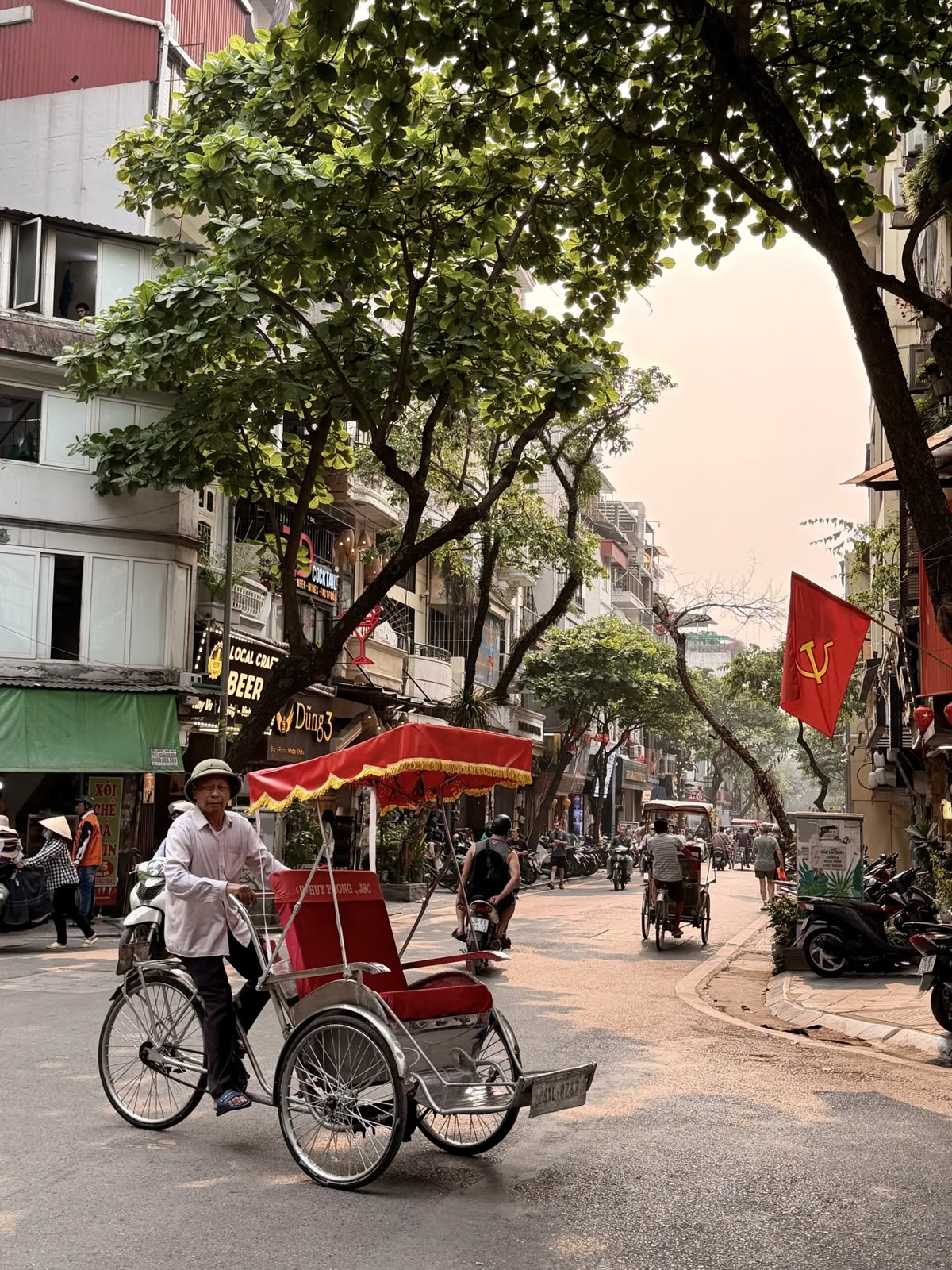
The Old Quarter (Hoan Kiem District): Best for First-Timers & Walkability
The beating heart of Hanoi, consisting of 36 ancient guild streets named after the goods historically traded there (Silk Street, Silver Street, Bamboo Street).
- Vibe Bustling, energetic, historic, endlessly walkable.
- Best for Travelers who want to step straight from their hotel lobby into street food alleys, cafes, and vibrant nightlife.
- Note Street noise can start as early as 6:30 AM; request a room facing an internal courtyard if you are a light sleeper.
The French Quarter (South of Hoan Kiem): Best for Luxury & Heritage
Characterized by wide, tree-shaded boulevards, grand yellow neoclassical facades, art galleries, and the magnificent Hanoi Opera House.
- Vibe Sophisticated, peaceful, and elegant.
- Best for Couples, honeymooners, and travelers seeking boutique luxury hotels (such as the historic Sofitel Legend Metropole).
West Lake (Tay Ho District): Best for Extended Stays & Cafes
A breezy, expansive residential district surrounding Hanoi's largest freshwater lake.
- Vibe Relaxed, international, bohemian, dotted with rooftop cocktail bars, lakeside coffee shops, and wellness studios.
- Best for Digital nomads, repeat visitors, and anyone wanting a quiet sanctuary away from scooter horns.
4. Top Things to Do & Hidden Corners
1. Sunrise Stroll Around Hoan Kiem Lake (6:00 AM – 7:30 AM)
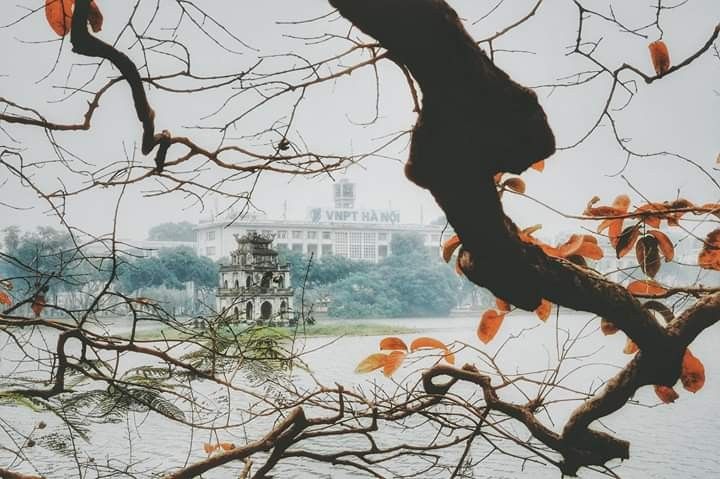
Before the city awakens to its legendary traffic rush, Hoan Kiem Lake belongs to the locals. Watch seniors practice Tai Chi and ballroom dancing along the mist-draped shore, while runners loop around Ngoc Son Temple. The morning light filtering through the lakeside willow trees offers one of the most serene sights in all of Vietnam.
2. Discovering the Secrets of Dong Xuan Alleys
While the main Dong Xuan Market building can feel overwhelming with wholesale textiles, the surrounding alleys (specifically Ngõ Đồng Xuân) hide the city's highest concentration of culinary heritage. Here, multi-generational street vendors dish out piping hot bowls of snail noodle soup (Bún ốc) and grilled pork patties on charcoal braziers.
3. Exploring the Temple of Literature (Văn Miếu)
Founded in 1070 as Vietnam's first national university, this exquisitely preserved specimen of traditional Vietnamese architecture is dedicated to Confucius. Walk through five manicured courtyards, gaze at the ancient stone stelae resting on giant stone turtles, and soak in the scholar culture that has shaped Vietnamese history for a millennium.
4. Experiencing Hanoi Train Street (Respectfully & Safely)
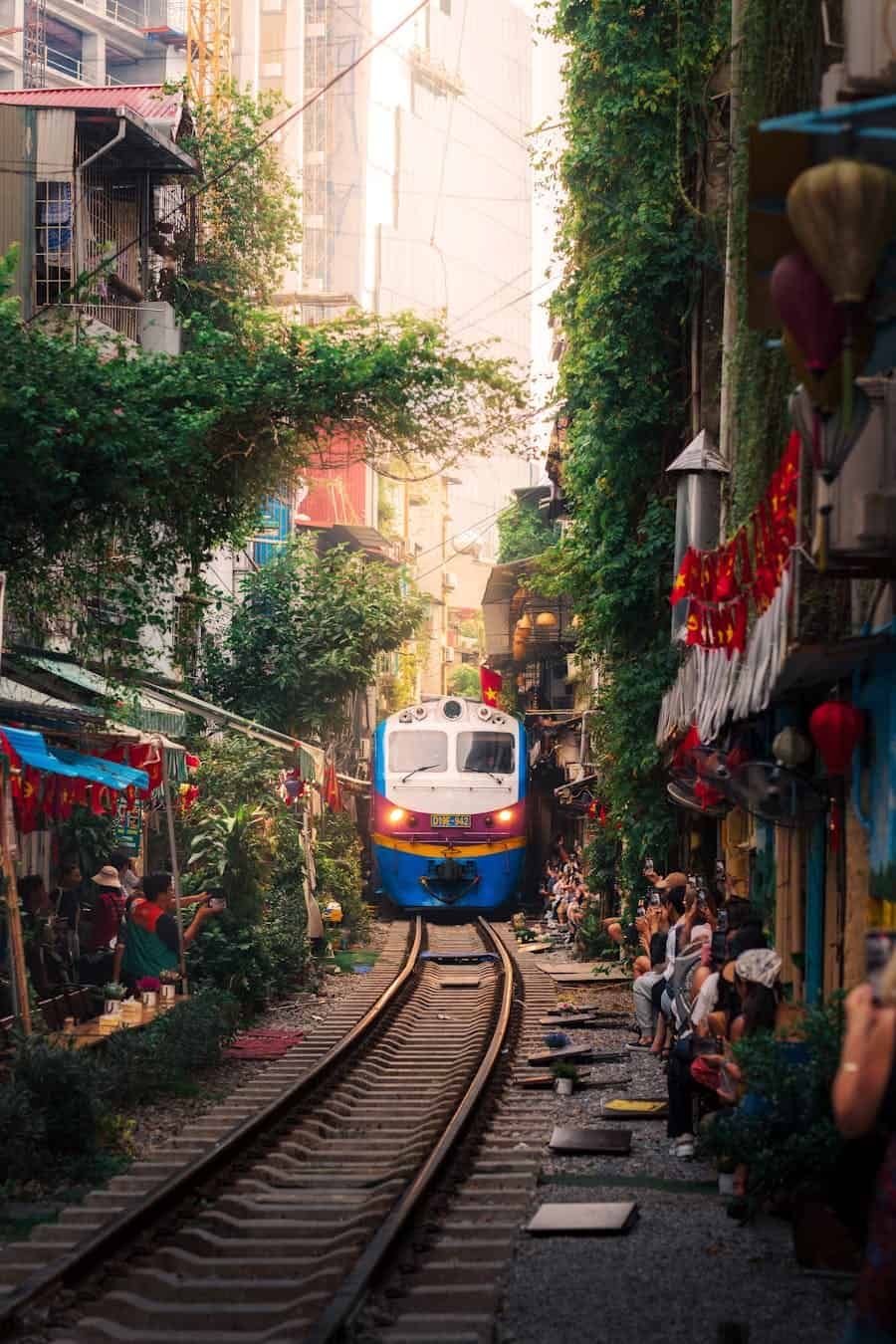
The iconic railway slicing through narrow residential houses is a fascinating visual spectacle. While authorities have periodically regulated access for safety reasons, authorized local cafes along the tracks welcome visitors to sit safely behind safety barriers with an iced egg coffee while the train rumbles past inches away.
5. Hidden Courtyards & Heritage Coffee Houses
Escape the street commotion by slipping down unassuming residential passageways (ngõ). Behind crumbling facades lie tranquil French-colonial courtyards, independent bookshops, and vintage cafes like Café Đinh overlooking the lake or Nhà Sàn Art Cafe.
5. What to Eat: A Culinary Masterclass
Hanoi food is celebrated for its subtle balance, fresh herbal aromatics, and clean, savory broths. Here are four foundational dishes you cannot leave without tasting:
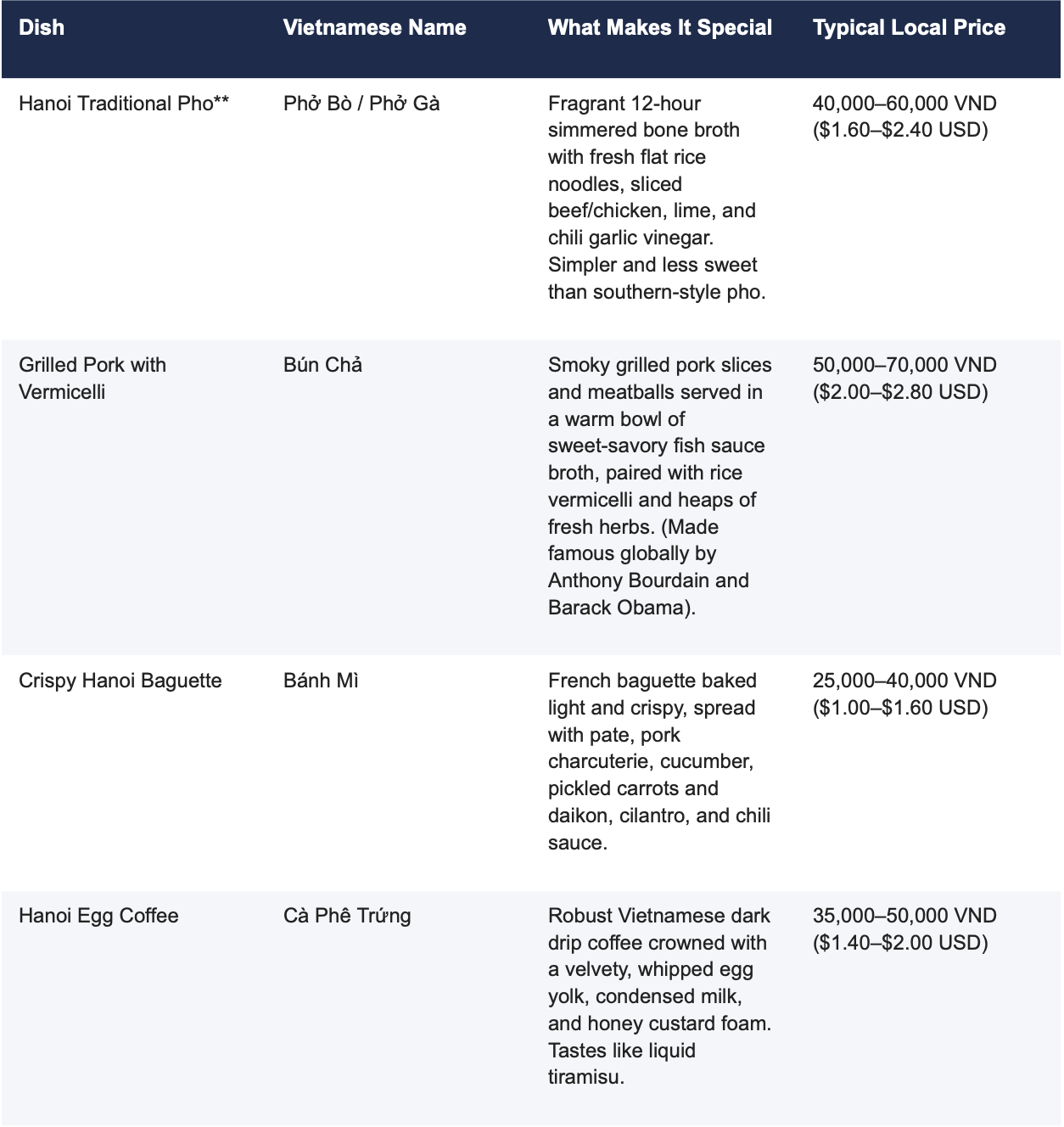
6. Staying Safe & Scam-Free in Hanoi
Hanoi is statistically one of the safest capital cities in Asia, with very low rates of violent crime. However, petty tourist scams can happen if you are unprepared:
1. The Cyclo Fare Misunderstanding: Cyclos (three-wheeled rickshaws) are a charming way to tour the Old Quarter. However, always agree on the exact price beforehand, and explicitly confirm whether the quoted price is per person or for both passengers, and whether it covers the entire trip or per hour. Write the agreed amount on your phone screen to avoid misunderstandings at the destination.
2. The "Free" Fruit Basket Photo Trap: Women carrying traditional conical hats and bamboo shoulder baskets (đòn gánh) of pineapples or bananas may smile and place the basket across your shoulders for a photo. Once you take a picture, they will insist you purchase their fruit at 5 to 10 times the market price. Politely shake your head and say *"Không, cảm ơn" (No, thank you) before they place the basket.
3. Shoe Shiners on Foot: Someone may crouch down and point at a scuff on your sneakers, applying glue or cleaner without asking, then demand 200,000–400,000 VND. A firm and immediate "No, thank you"* with a wave of your hand will prevent this.
4. Crossing the Street with Confidence: The legendary Hanoi traffic looks terrifying to newcomers, but there is a rhythm to the scooter flow. When crossing at an intersection or crosswalk: walk at a steady, predictable, slow pace. Do not make sudden stops or sprint backwards. Scooter riders calculate your path and smoothly steer behind or around you.
7. Turn Your Hanoi Journey Into Lifetime Memories: The Private Photo Walk Experience
You can explore Hanoi on your own with a phone camera, but selfie sticks and tripod setups come with undeniable friction: you either end up with unflattering chin-angle selfies, awkward posed expressions, or you spend half your precious morning worrying about camera angles rather than living in the moment.
That is why TravelFrame was born.
We host private, relaxed walking photo tours led by passionate local photographers who know every hidden doorway, sunlit courtyard, and heritage alley in the Old Quarter.
- No Stiff Posing We don't make you stand awkwardly in front of crowded tourist monuments. We guide you through quiet, picturesque street corners while sharing authentic stories about local life, capturing natural, candid documentary portraits as you genuinely enjoy your walk.
- Perfect for Solo Travelers & Couples If you are traveling solo, you finally get magazine-worthy travel portraits without asking strangers. If you are a couple, you both get to be in the frame together.
- High Quality Delivered Within 24 Hours We know you want to share your travel highlights with family and followers while you're still on your trip. You receive your professionally edited gallery within 24 hours of finishing your tour.
👉 Ready to explore Hanoi with a local photographer friend? Discover TravelFrame Private Photo Tours or grab our free 24-Hour Hanoi Itinerary Guide HERE
Frequently Asked Questions (FAQ)
Is Hanoi safe for solo female travelers?
Yes, Hanoi is widely considered one of the safest travel destinations in Southeast Asia for solo women. Street harassment is rare, and violent crime against tourists is extremely low. Standard precautions apply: avoid unlit alleys late at night, watch your bag near busy traffic, and book transportation through official apps like Grab.
How many days should I spend in Hanoi?
We recommend spending at least 3 full days in Hanoi to properly explore the Old Quarter, savor the street food culture, visit key cultural landmarks (Temple of Literature, Ho Chi Minh Complex), and enjoy a leisurely afternoon around West Lake before heading to Halong Bay or Ninh Binh.
What is the best way to get mobile internet (SIM/eSIM) in Hanoi?
The easiest method is purchasing a travel eSIM online prior to departure (providers like Airalo or Viettel/Vinaphone tourist eSIMs). If your phone does not support eSIM, buy a physical SIM card directly at official telecom counters at Noi Bai Airport (expect to pay 200,000–350,000 VND / $8–$14 USD for generous 4G data packages).