
Last checked: November 20, 2026. Ticket prices change, so confirm at the gate.
Đường Lâm feels like the countryside your Hanoi taxi driver grew up in. Lanes of brown laterite stone, old wooden houses with clay-tile roofs, a banyan tree by the village gate and very little traffic.
It is a living village, not a museum. People farm, cook and dry rice here, which is exactly why it is worth the drive.
Quick answer
- Where: about 45–50 km west of central Hanoi, near Sơn Tây.
- Getting there: 1–1.5 hours each way by car. Public buses go to Sơn Tây, then a short taxi ride.
- Ticket: about 20,000 VND for adults, sold next to the Mông Phụ village gate.
- Best time: a weekday, with late afternoon for the warm light on the stone walls.
- How long: 2–3 hours in the village. Plan a relaxed full day with the drive and lunch.
What makes Đường Lâm different
Most villages near Hanoi have rebuilt in concrete. Đường Lâm kept its old layout and much of its stone. It was the first village in Vietnam to be recognised as a national historical and cultural relic.
The walls, gates and many houses are built from laterite, a rust-colored stone cut from the local ground. In soft light the whole village turns warm orange-brown.
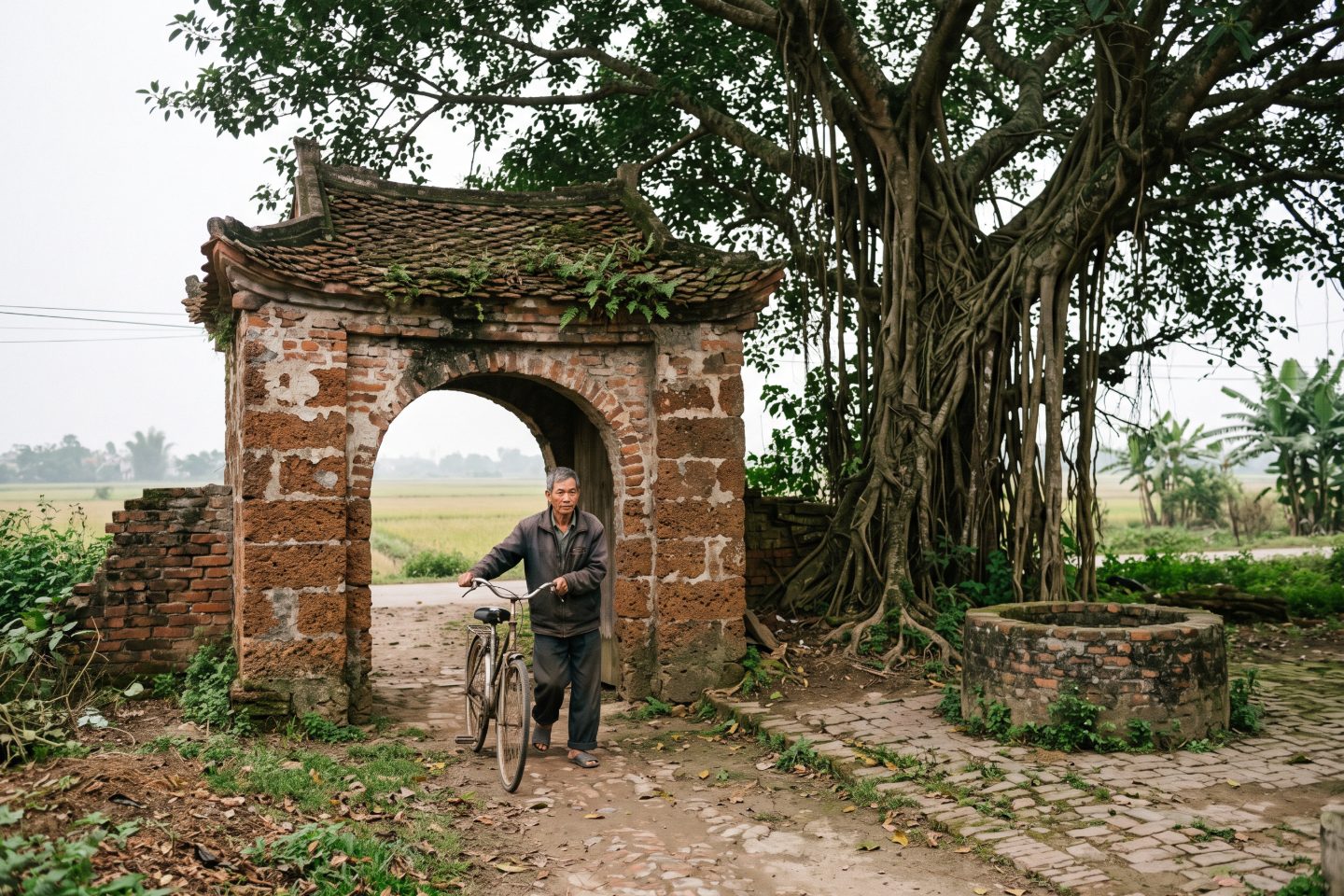
The village is also known as the "land of two kings": Phùng Hưng and Ngô Quyền, two historic rulers, are said to come from here, and both have temples nearby.
What to see and do
Mông Phụ gate and communal house
The old gate and the communal house (đình) behind it are the heart of the village. Arrive here first, buy your ticket and get your bearings.
The old houses
Several families open their old wooden houses to visitors. Some are said to be around 300–400 years old. Look for carved wooden beams, ancestor altars and inner courtyards.
These are homes. Some ask a small fee or hope you buy something. Ask before you go in, and before you photograph people inside.
Tea, peanut candy and local soy sauce
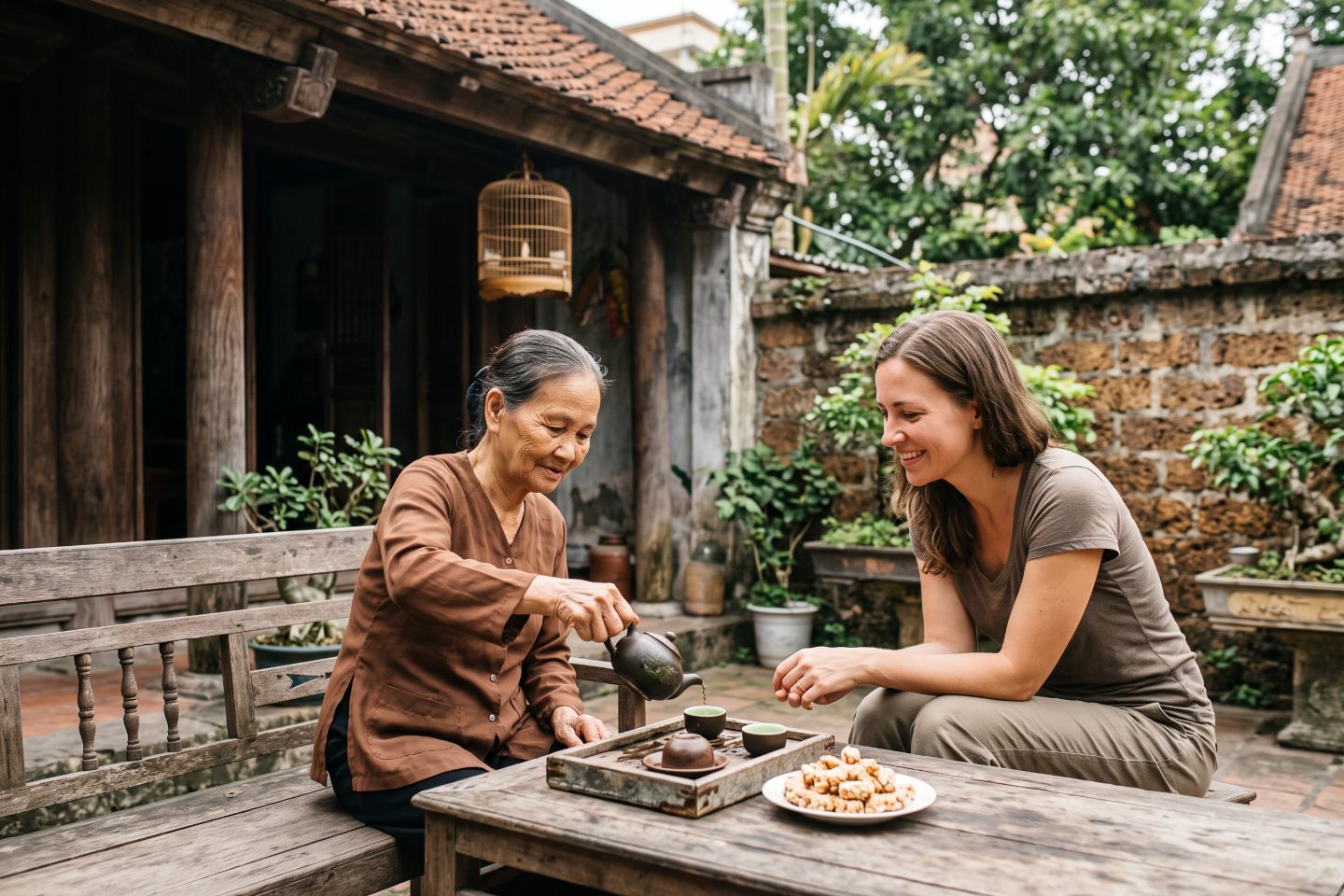
Đường Lâm is known for simple local food: peanut candy (kẹo lạc), sticky rice sweets (chè lam) and fermented soy sauce (tương). A cup of green tea in a courtyard is one of the nicest ways to rest.
Cycling the lanes
The village is flat and quiet, so a bicycle is the best way to cover the lanes and the rice fields at the edge. Ask near the gate or at your lunch spot about rentals.
Mía Pagoda
Chùa Mía, a short ride away, is a calm old pagoda with many traditional statues. It is worth 30 minutes if you have time.
How to get there from Hanoi
| Option | Time each way | Notes |
|---|---|---|
| Private car or Grab | 1–1.5 hours | Easiest. Agree on the return trip, or keep the same driver for the day. |
| Public bus + taxi | about 2 hours | Buses run from Hanoi to Sơn Tây; take a taxi for the last stretch. Cheap, but slower and harder without Vietnamese. |
| Tour | 1–1.5 hours | Many day tours combine Đường Lâm with a pagoda or a cooking lunch. |
Comparing it with other trips? See our day trips from Hanoi and half-day trips from Hanoi.
A relaxed day plan
- 9:00 Leave Hanoi.
- 10:30 Arrive at Mông Phụ gate. Walk the central lanes and visit an old house.
- 12:00 Lunch in the village. Some old houses serve home-style meals; ask ahead.
- 13:30 Rest, tea, or a short visit to Mía Pagoda.
- 15:30 Cycle or walk the lanes in the warm light.
- 17:00 Drive back to Hanoi.
Photo tips
- Light: 3:30 to 5:00 pm. The low sun brings out the texture of the laterite walls.
- Colors: white, cream, soft blue or green stand out against the orange-brown stone. An áo dài works well here; see four áo dài looks in Hanoi.
- Angles: shoot along a lane so the walls lead toward you. Gates and banyan trees make natural frames.
- People: ask first and respect a no. Older residents are often happy to be photographed after a friendly chat, but not always.
Want photos of yourself in the village?
A TravelFrame photographer-guide can plan the day with you, handle the route and photograph you naturally in the lanes and courtyards. Photography is priced per hour for up to 2 guests: Basic 30 USD, Premium 60 USD (from 2 hours) and VIP 99 USD (from 2 hours). We confirm the car, the hours and the total in writing before you book. See Hanoi photoshoot, or send "PHOTO" to @travelframe.vn on Instagram.
FAQ
Is Đường Lâm worth visiting?
Yes, if you like quiet countryside and old architecture. It is a living village with laterite-stone lanes and old wooden houses, about 1–1.5 hours from Hanoi.
How much is the Đường Lâm entrance ticket?
About 20,000 VND for adults, sold at the counter beside the Mông Phụ gate.
How far is Đường Lâm from Hanoi?
About 45–50 km west of central Hanoi, near Sơn Tây. Allow 1–1.5 hours by car.
Can I visit Đường Lâm by bus?
Yes. Take a bus from Hanoi to Sơn Tây, then a short taxi. It is cheap but slow, so most visitors book a car.
Can I combine Đường Lâm with Ba Vì?
It is possible, since both are west of Hanoi, but it makes a long day. Pick one if you want time to enjoy it.