
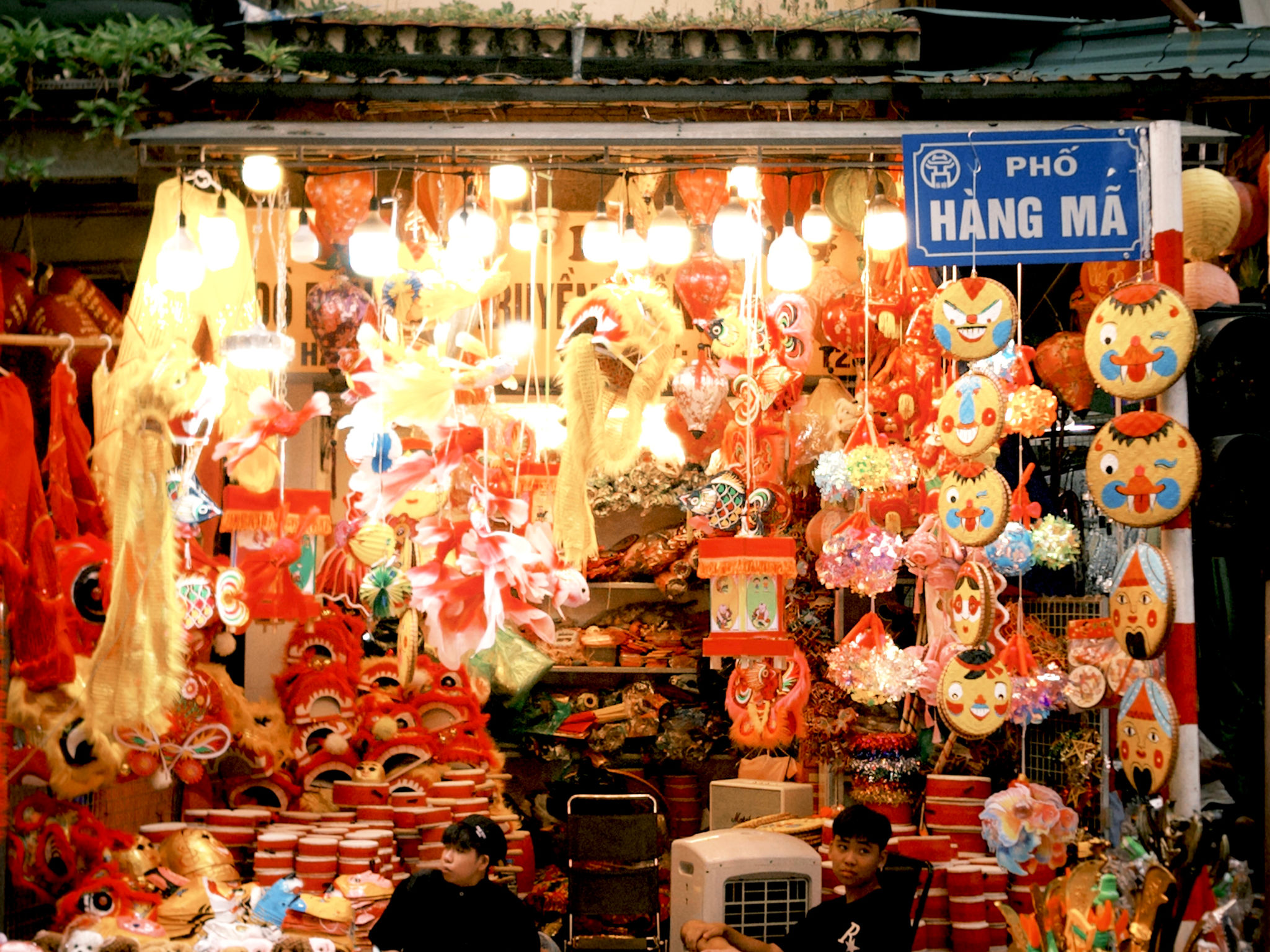
"Hàng mã" isn't really a brand name or a proper noun — it's a category of object, the generic Vietnamese term for the paper things people burn as offerings to the dead: joss paper, spirit money, and increasingly, absurd modern miniatures of whatever the living think the dead might want. Paper motorbikes. Paper villas. I've seen paper iPhones with a little paper charging cable coiled next to them, which is either very touching or very funny depending on your mood that day. This street has been the center of that trade for more than five hundred years, which is longer than almost anything else you'll see in the Old Quarter still doing more or less its original job.
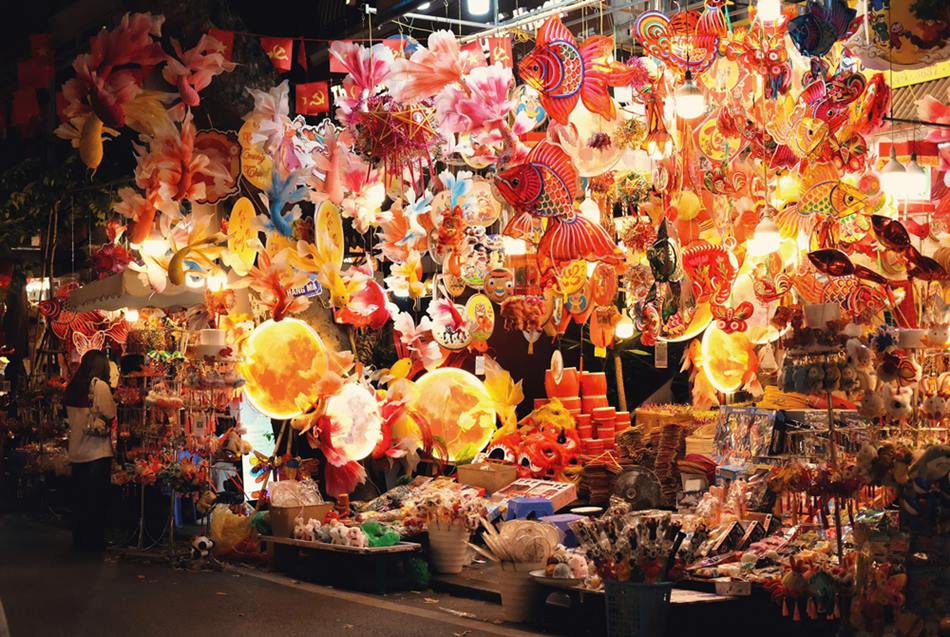
It wasn't always allowed to. For a stretch of the pre-reform period, votive offerings were treated as superstition the state didn't want circulating, and there were crackdowns as late as 1991, when authorities confiscated and destroyed merchants' stock right here on the street. It's worth remembering that when you're standing under two hundred meters of paper lanterns thinking about how photogenic it all is — this is a trade that survived actual suppression to get back to doing what it's doing now.
Because most of the year, Hàng Mã looks less like a funeral supply street and more like a parade got frozen mid-march. Around Mid-Autumn Festival, usually landing somewhere in August or September, the shopfronts vanish behind walls of lanterns — the classic star-shaped ones on sticks that kids carry, glowing paper lion and dragon heads stacked three and four deep, rabbit lanterns, fish lanterns, strings of tiny lightbulb lanterns that shopkeepers plug in the second the light starts to drop. I went at 6pm in September, right in that window between 5:45 and 6:45 that photographers around here call blue hour for a reason — the sky goes this deep ink color and every single lantern on the street lights up against it at once. It's genuinely one of the most visually overwhelming streets in Hanoi at that hour, in the best way. Around Tết, usually January or February, the whole street re-costumes itself again: red and gold everywhere, spring blossom decorations, calligraphy artists set up folding tables to brush good-luck characters onto red paper on the spot, and the lanterns give way to red envelopes stacked in the thousands.
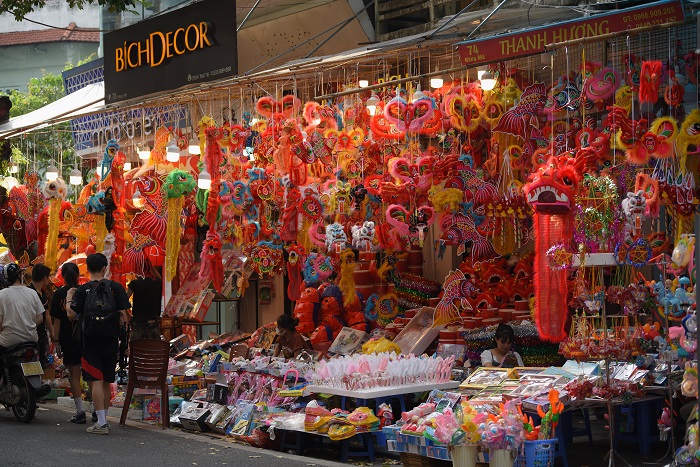
A practical note, because I got elbowed more than once: this street is narrow and it is not built for the crowds it pulls during festival season, especially on weekend evenings. If you want photos without forty people in every frame, get there closer to 5:30, before the after-work crowd arrives, and expect to be walking, not browsing — motorbikes still use this street even when it's packed with pedestrians, so keep half an eye behind you.
Between festivals, Hàng Mã calms down into something closer to its everyday self — still selling paper offerings, party decorations, and increasingly whatever plastic gift-wrap and costume items are in season, which isn't quite as striking but is arguably more honest about what the street actually does for a living most days of the year. Either way, come at blue hour if you can. It's the one time of day this street looks exactly like what people mean when they talk about it. Hàng Mã is also a stop on the Hanoi Unfiltered local life tour.
Want relaxed photos of yourself around Hanoi? A private Hanoi photoshoot pairs you with a local photographer-guide, and the package, duration and price are confirmed in writing.