
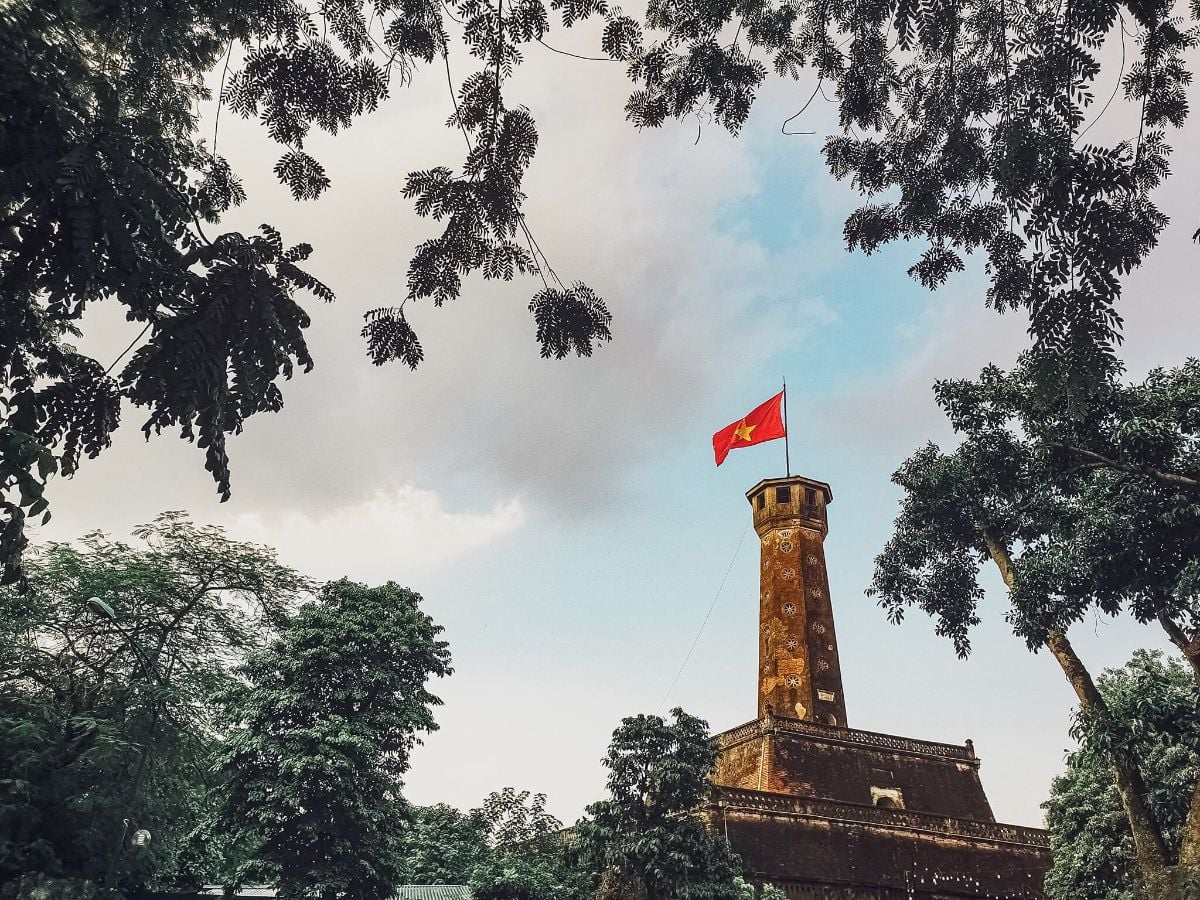
I'll be upfront about this one: the Flag Tower is in an awkward in-between moment right now, and if you go expecting to climb it, you might be disappointed. For years, the tower was folded into a visit to the old Vietnam Military History Museum — you'd walk past tanks and artillery pieces on your way to the octagonal staircase and climb up for the view over Điện Biên Phủ Street. That museum relocated to a new, much larger site in Nam Từ Liêm district in late 2024, and management of the tower itself was handed over to the Thăng Long – Hanoi Heritage Conservation Center, bringing it under the same umbrella as the Imperial Citadel next door.
What that's meant in practice is a period of limbo. As of my last check, visitors can walk around the base and photograph it — which, honestly, is most of what people came for anyway — but interior access and the climb to the top are restricted while the site undergoes safety evaluation and restoration planning. That could change; heritage sites in Hanoi have a habit of reopening with new hours once renovation wraps, so it's worth checking current status before you build a visit around getting inside.
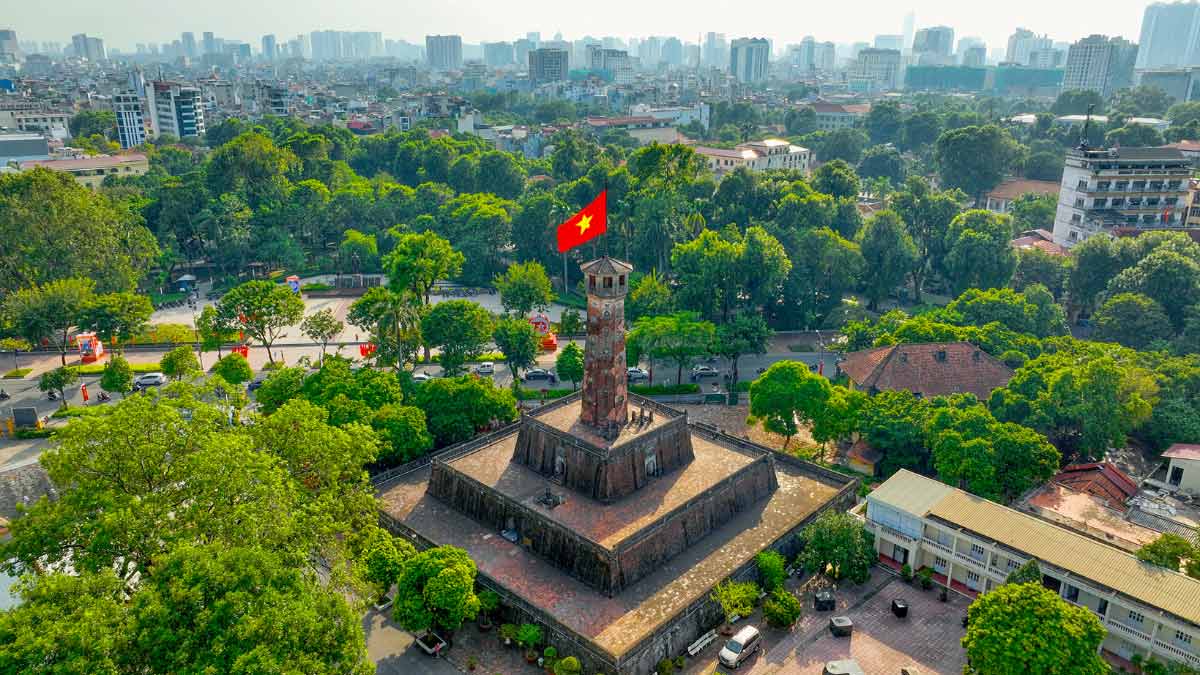
What hasn't changed is how good the tower looks from the street. It's a genuinely elegant piece of Nguyen Dynasty military architecture — three stepped pyramidal platforms rising into a tall, narrow octagonal shaft, built between 1805 and 1812 under Emperor Gia Long as an observation post for the old Thăng Long citadel garrison. There's a 54-step spiral staircase inside leading to a small pavilion at the top, which is the part currently off-limits, but the exterior silhouette alone is worth the stop, especially against a clear late-afternoon sky when the brickwork goes a warm ochre color.
Why it's still standing at all
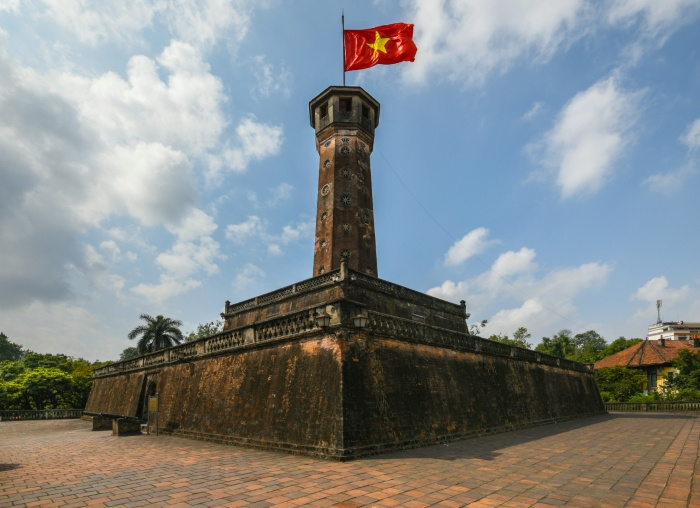
The tower survived something most of the rest of the old citadel didn't. When the French took over Hanoi in the 1890s, they demolished large sections of the imperial citadel to build their own administrative quarter, and the Flag Tower was slated to go with it. It didn't, largely because the French ended up using it themselves as a military observation post — a practical reuse that accidentally preserved one of the few intact pieces of the old citadel's military architecture. It later became a place of real symbolic weight: the Vietnamese flag was raised here after the 1945 August Revolution, and again in 1954 when the French withdrew from Hanoi. It was declared a national monument in 1989 and became part of the citadel's UNESCO World Heritage listing in 2010. Today it is also a stop on our French Colonial history photo tour.
Practical details
Address is 28A Điện Biên Phủ Street, Ba Đình District — a short walk from the citadel's main gate. It's expected to eventually fall under the citadel's general hours (daily, 8am–5pm) and possibly its ticketing structure once the transition settles, but given the restrictions currently in place, I'd treat any specific hours or prices you read online as provisional until you're standing there. Ten minutes is enough for the base and photos; it's the kind of stop you fold into a longer walk through the citadel grounds rather than a destination on its own, and it's one of the small architectural details our photo walks through Ba Đình tend to pause at — even from outside, it photographs like it knows it's the oldest thing left standing on that stretch of street.
Want relaxed photos of yourself around Hanoi? A private Hanoi photoshoot pairs you with a local photographer-guide, and the package, duration and price are confirmed in writing.