
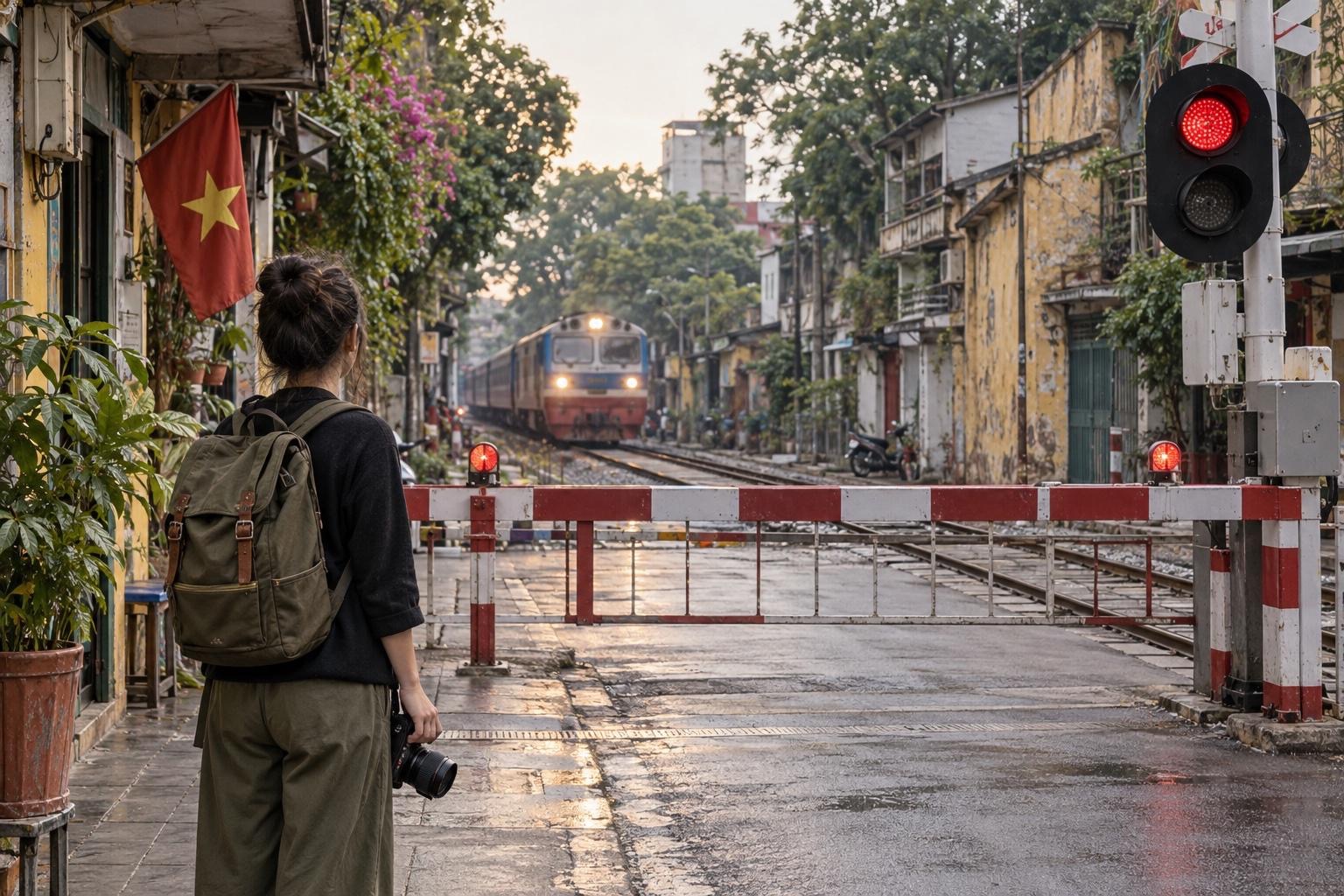
Hanoi Train Street is one of the city's most searched locations. It is also an active railway corridor running through a residential neighborhood.
That distinction matters.
Online posts often describe Train Street as either fully open or completely closed. The reality is less convenient: access and enforcement can change, barriers must be respected, and a cafe invitation does not override instructions from railway staff or local authorities.
This guide explains how to approach the area responsibly, why static train timetables are unreliable, and where to find railway atmosphere without standing on the tracks.
Quick answer (October 2026): Hanoi Train Street is the stretch of active railway between Phùng Hưng and Lê Duẩn, where trains pass a few steps from people's front doors. Access is controlled and changes without notice. Some days cafés along the line serve visitors, other days barriers are closed. Treat it as an optional stop, never stand on the tracks, and follow staff instructions immediately.
Is Hanoi Train Street Open in 2026?
The safest answer is: do not assume access is available.
Hanoi authorities have repeatedly increased enforcement around the railway corridor. Official city reporting in March 2025 described inspections and penalties for people entering the railway safety area to take photos. In April 2026, local authorities around the Khâm Thiên and Lê Duẩn section announced tighter monitoring, including cameras, and reiterated that tourism businesses must not occupy the railway safety corridor.
Conditions can differ by entrance and can change without notice. A route that appeared open in a recent social post may be closed when you arrive.
Use these rules:
- Stop at every barrier or checkpoint.
- Follow railway staff, police and local security immediately.
- Never climb around a barrier or follow someone through a residential entrance.
- Never stand, sit or place a tripod on the rails.
- Do not treat a drink purchase as permission to ignore an official restriction.
Pro move: plan Train Street as an optional observation stop, not the anchor of your Hanoi day.
Why We Do Not Publish a Fixed Train Street Schedule
Search results are full of minute-by-minute Train Street timetables. Many are copied from older blogs, cafe boards or social posts.
That creates false confidence.
Passenger and freight operations can change because of delays, maintenance and operational decisions. The time printed on a rail ticket or booking page is not a guarantee of the exact minute a train will pass a specific city crossing.
Before going:
- Check current passenger train information through Vietnam Railways or an official ticketing channel.
- Ask your hotel or accommodation to verify local access on the same day.
- Treat any cafe timetable as an estimate.
- Leave if authorities close the area.
If seeing a train is essential to your trip, use a normal public level crossing and remain behind the closed barrier. You may not get the viral close-up angle, but you will get a truthful view of Hanoi's working railway.
What the Street Is Actually Like
When access is permitted, the scene is quieter than viral videos suggest. Cafés along the line set out low stools behind a painted safety line, staff ask everyone to stay seated when a train is due, and the train itself moves slowly but weighs hundreds of tonnes. You feel the air shift before it fully appears.
It is free to walk where access is open. Twenty to thirty minutes is enough to see the street. Allow longer if you plan to wait for a passing train, which is never guaranteed at a specific minute.
Best Light for Photos
The corridor is narrow, so midday light is flat and harsh. Late afternoon (around 5–6pm) brings low light along the tracks, catching the laundry lines and turning the rails amber. Early weekday evenings are usually less crowded than weekends.
Ground Level vs. Upper Floors
At ground level you see how close daily life is to the railway. From an upper-floor window or balcony overlooking the line, where a business offers one, you can frame the whole scene: the curve of the tracks between houses, laundry overhead, and the train as one detail in a lived-in street. Both views only apply when access is permitted on the day.
Essential Safety Rules
Stay Outside the Railway Corridor
The rail line is transport infrastructure, not a pedestrian street. Keep your body, phone, camera straps and luggage behind the barrier or marked safety boundary.
Do Not Copy Social Media Behavior
A video may have been filmed before restrictions changed. It may also show unsafe or unauthorized behavior. The fact that someone captured a shot does not make the shot legal or repeatable.
Keep Children Beside You
Children should remain directly supervised and well away from the track. If the area becomes crowded, leave rather than trying to hold your position.
Respect the Neighborhood
People live beside the railway. Keep voices low, do not photograph residents through windows, and ask before taking a close portrait of a person or business.
Leave When Asked
Do not negotiate for one more photo. Do not argue that another visitor was allowed through. A calm exit protects you and reduces pressure on the community.
Three Calmer Ways to Photograph Hanoi's Railway Heritage
These ideas still require normal street awareness. They are alternatives to entering the narrow residential rail corridor, not promises of unrestricted access.
1. Phùng Hưng Mural Street and the Railway Arches
Phùng Hưng offers old masonry, murals and layered streetscape details near the elevated railway. Work from the public pavement and frame the arches, trees and neighborhood activity.
Best approach: arrive in the morning, keep the composition wide and ask before including a vendor or resident as the main subject.
2. Long Biên Bridge Approaches
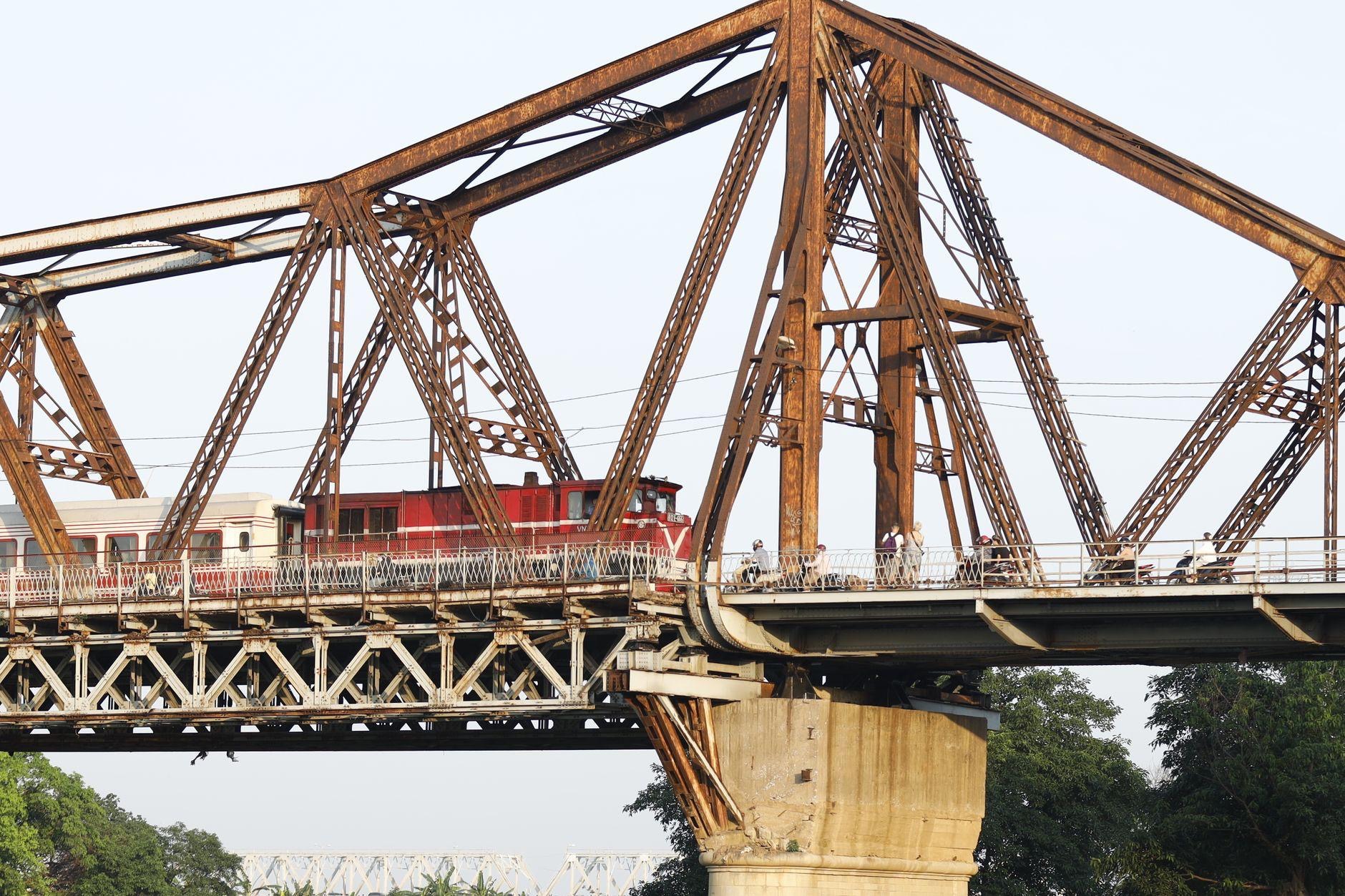
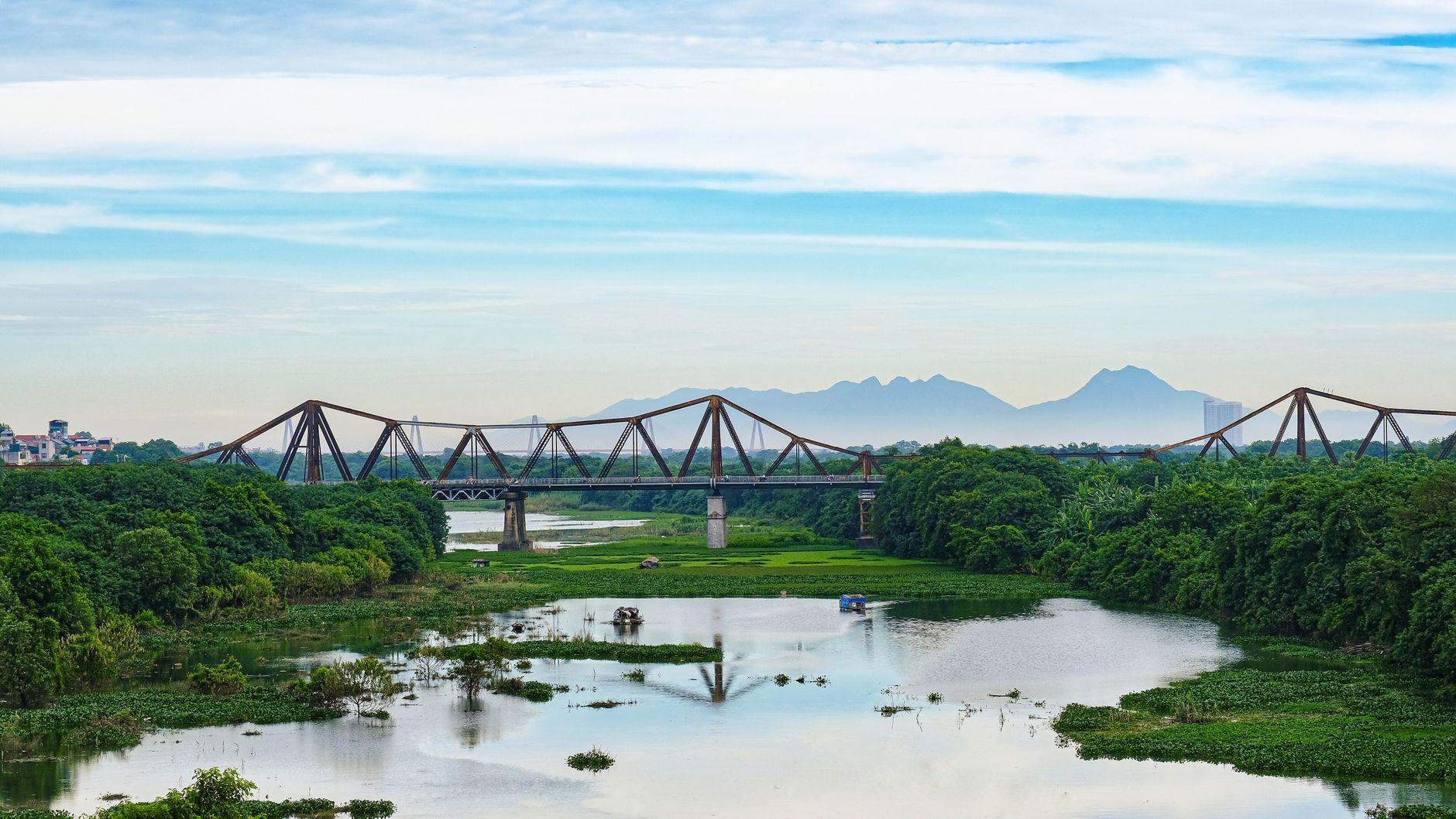
Long Biên Bridge is one of Hanoi's strongest visual symbols. The iron structure, Red River landscape and nearby market activity create more photographic variety than a single viral alley.
Use designated pedestrian areas and stay separated from the railway line. Conditions on the bridge can be windy and busy, so secure loose clothing and camera straps.
3. A Public Level Crossing
A normal public crossing can show the rhythm of Hanoi's railway without requiring anyone to enter the track area. Stand on the pavement behind the barrier and photograph the wider scene: waiting scooters, the warning light and the train moving through the city.
This angle tells a more honest story. It shows how the railway is part of daily Hanoi, not a stage built for visitors.
A Better Hanoi Photo Plan
If Train Street is closed, your day is not ruined. Hanoi has hundreds of visual layers within a short walk:
- Weathered facades and craft streets in the Old Quarter.
- Morning life around Hoàn Kiếm Lake.
- French-era architecture around the Opera House.
- Temple courtyards, with respectful dress and photography.
- Long Biên's iron structure and river landscape.
TravelFrame's working approach is simple: build a flexible walking route around the light, the guest's pace and current local conditions. We do not guarantee Train Street access or place it in a fixed route.
For help planning a private, photo-friendly Hanoi walk, visit TravelFrame or message PHOTO to @travelframe.vn. Exact routes, inclusions and delivery details are confirmed in writing before booking.
Frequently Asked Questions
Can I enter if a cafe owner invites me?
An invitation does not override a barrier or instruction from authorities. Follow the restriction you see on the day.
Where can I find the current train time?
Check Vietnam Railways or an official rail ticketing channel, then treat the passage time at any particular crossing as approximate. Do not rely only on a blog timetable.
Can I take photos from behind a barrier?
Yes, when you remain in a public area and follow staff instructions. Keep equipment out of the railway corridor and avoid blocking traffic.
Is Train Street included in TravelFrame routes?
No fixed route guarantees Train Street. Any route is adjusted to current access, safety and the guest's confirmed priorities.
Is Hanoi Train Street open right now?
Access changes, so check on the day with your accommodation and follow any barrier or staff instruction. Social posts and blog timetables, including older ones, may already be out of date.
How long should I spend at Train Street?
20–30 minutes to see the street. Waiting for a train can take much longer and may not happen at the time you expect.
Where is Hanoi Train Street?
The best-known section runs between Phùng Hưng street and Lê Duẩn, near Hanoi Railway Station, a short walk west of the Old Quarter.
Editorial Sources
- Hanoi city report on Train Street enforcement, March 25, 2025
- Văn Miếu ward report on railway safety monitoring, April 13, 2026:
Planning the rest of your walk? See our Hanoi Old Quarter guide and the 15 best photo spots in Hanoi.