
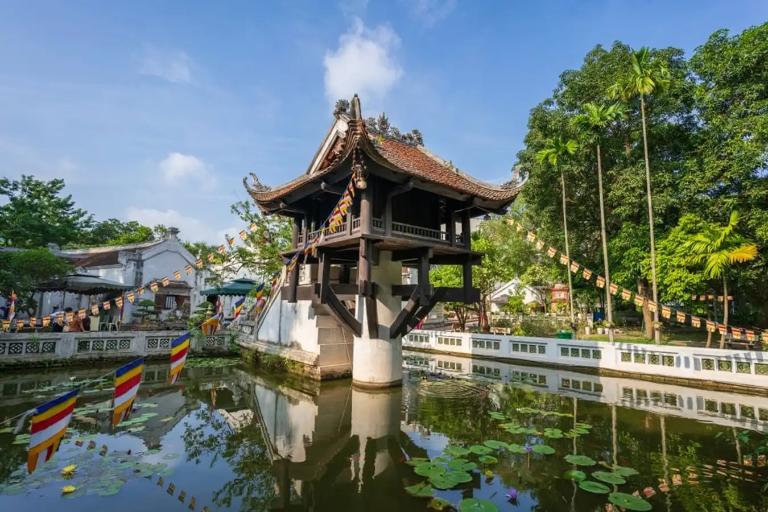
The first time someone drags a friend to One Pillar Pagoda, there's usually a moment of "wait, that's it?" I've watched it happen more than once. You come around the hedge, camera already up, expecting something monumental, and instead there's this small wooden shrine perched on a single stone pillar rising out of a square lotus pond, no bigger than a garden gazebo. It takes about ninety seconds to walk all the way around it. And somehow that's exactly the point.
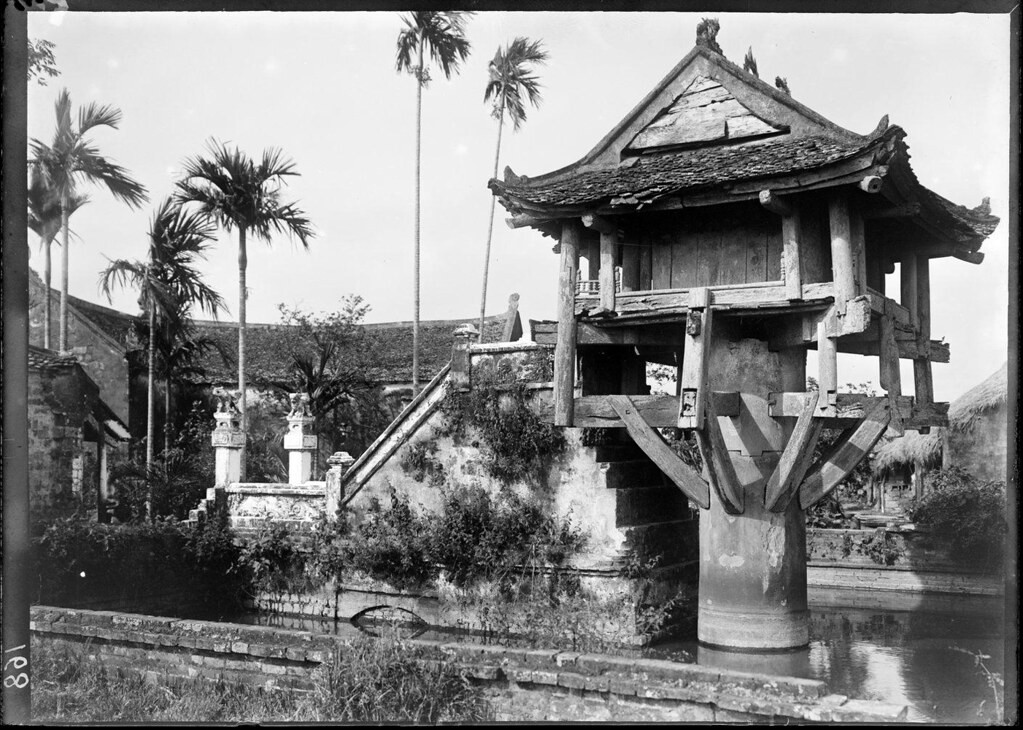
The story goes back to 1049, to an emperor named Ly Thai Tong who had no son. A monk told him to pray to Avalokiteshvara — Quan Am, the bodhisattva of compassion — and that night he dreamed she handed him a baby boy while seated on a lotus flower. Shortly after, he married a peasant girl and had his heir. In gratitude he ordered a pagoda built in the exact shape of that dream: one pillar rising from a pond like a lotus stem, a single wooden hall balanced on top like the flower itself. His grandson, Ly Nhan Tong, expanded and refined it around 1105. For nearly a thousand years, in one form or another, it stood.
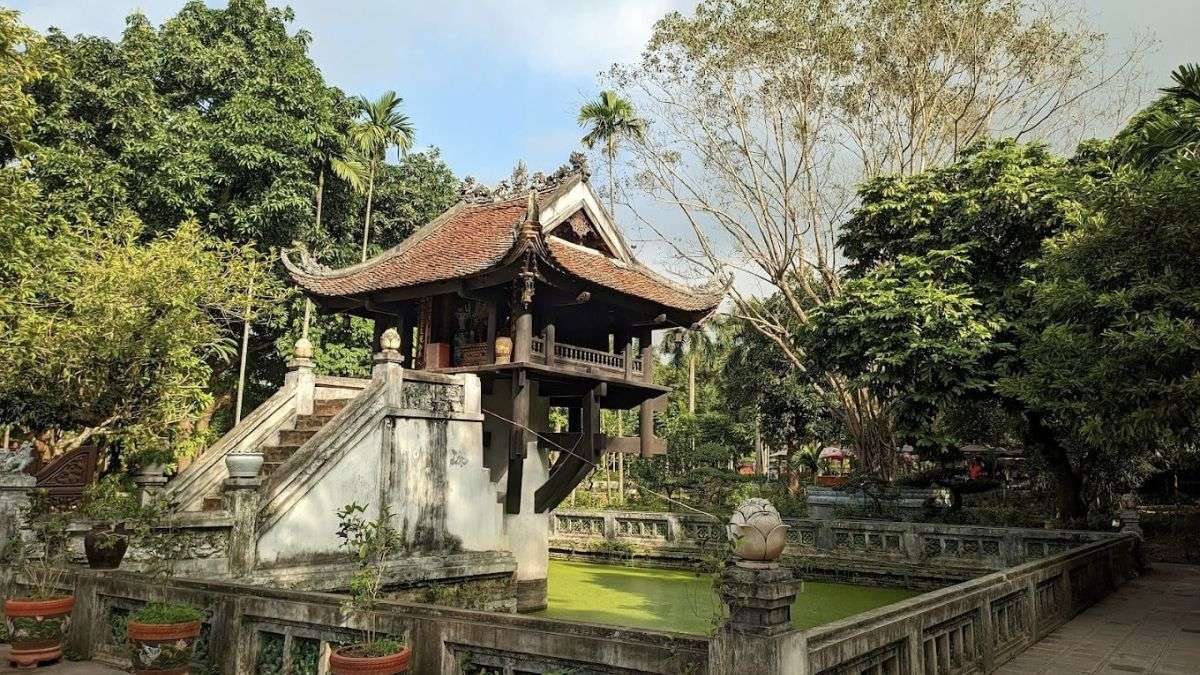
It didn't survive the wars intact. In 1954, as French forces were withdrawing from Hanoi, a French army lieutenant dynamited it — not on official orders, and he was later punished for it, but the pagoda came down all the same. What you're looking at today is a 1955 reconstruction by North Vietnam's Ministry of Culture, built to match Nguyen-dynasty style rather than the original 11th-century design. So no, you're not touching thousand-year-old wood. You're looking at a faithful copy of an idea that's survived a thousand years, which honestly might be the more interesting fact.
It sits inside the Ho Chi Minh Mausoleum complex in Ba Dinh, behind where the Presidential Palace stands, a short walk from the mausoleum itself. I'd budget ten to fifteen minutes here, not more — it's a stop, not a destination, and treating it like a full outing will just leave you disappointed by how quickly you've seen everything. Come for the shape of it, the reflection in the pond on a still morning, the small altar inside where locals still light incense. Early light around 8am, before the tour groups arrive from the mausoleum queue, is when the pond is calmest and you'll actually get an uninterrupted look at the reflection.
One practical note, timely as I write this: the Ho Chi Minh Mausoleum itself is closed for its annual maintenance from September 4 through November 2, 2026, which is happening right now. The good news is that doesn't shut you out of the pagoda — Ba Dinh Square, Ho Chi Minh's stilt house, and One Pillar Pagoda all stay accessible during the closure window. If you're planning around the mausoleum's viewing hours normally, just know that variable doesn't apply here; the pagoda keeps its own modest, low-key schedule regardless.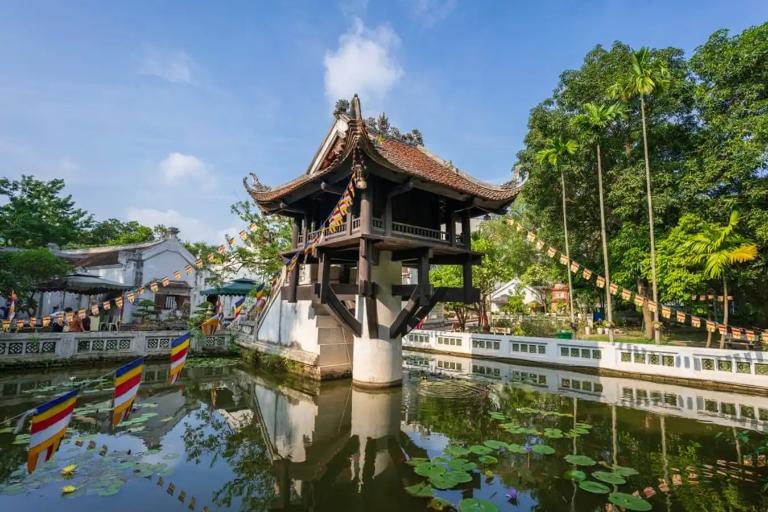
Bring dong for the small entry contribution some days, wear something that covers your shoulders since you're still inside a solemn government complex, and don't expect grandeur. What you get instead is something quieter — a thousand-year-old idea about gratitude, rebuilt twice, still standing on one leg. On our private photo walks through Ba Dinh we usually swing past here on the way to or from the mausoleum grounds, mostly because the light on that pond in the early morning is worth the detour even at ninety seconds a lap.
Turning the Trip Into a Shoot
The easiest place for a private photo walk is Day 1 morning, when the route already moves through varied Old Quarter and French Quarter textures.
TravelFrame's working experience combines a local companion, route planning, gentle posing support and photography. Exact package, duration, delivery and price are confirmed in writing.
Visit TravelFrame or message PHOTO to @travelframe.vn to discuss current options.
Frequently Asked Questions
Is 48 hours enough for Hanoi?
It is enough for a thoughtful introduction to the historic center and one wider neighborhood cluster. It is not enough to see every major attraction.
How should I travel between the Old Quarter and West Lake?
An app-based car is often the simplest option. Check the estimated fare in the app, confirm the vehicle and allow extra time for traffic.
What should I book in advance?
Confirm accommodation and any essential ticketed experience. Re-check official hours for museums, heritage sites and performances near the visit date.
Is this itinerary suitable for solo female travelers?
The route uses central, well-known areas and leaves daylight for most walking. Individual comfort and street conditions vary, so use normal city precautions and adjust any stop that feels uncomfortable.
👉 Want to visit Hanoi's temples and pagodas with a local who photographs you along the way? Join our The Spiritual & West Lake Breeze private tour.