
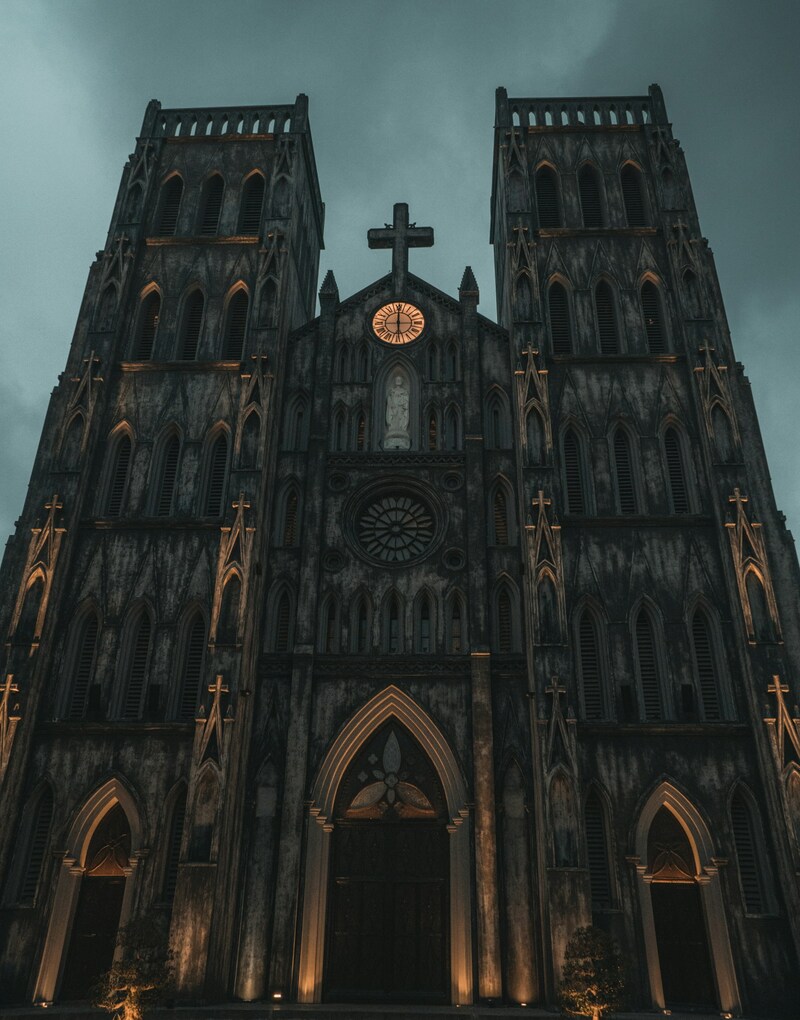
The first time the cathedral actually stopped me, rather than just registering as a landmark I already knew, was on a grey afternoon in the rain, around 4pm, when the stone had gone almost black with the wet and the two bell towers looked like they were cut out of the sky rather than standing under it. That soot-darkened, weathered look isn't neglect — it's just what almost a century and a half of Hanoi weather does to stone, and it's exactly what makes the building feel so much like Notre-Dame de Paris, which was clearly the intention from the start.
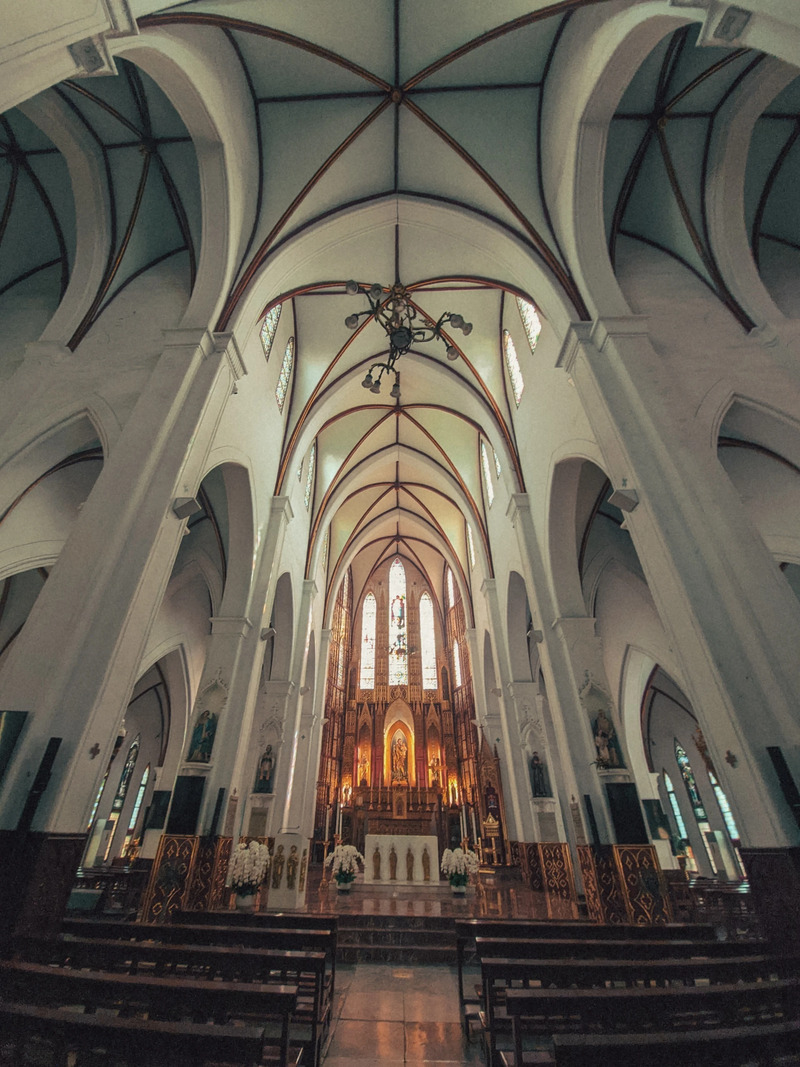
Construction began in 1884 and the cathedral was finished and consecrated in December 1886, which makes it one of the very first major structures the French colonial administration put up in Hanoi — they were making a statement, and they built it to last. It went up on the site of Bao Thien Pagoda, an eleventh-century Ly dynasty structure that had collapsed centuries earlier, which is a detail I think about every time I'm standing on Nha Chung Street: this ground has been sacred, in one religion or another, for close to a thousand years. The stained glass was made in France and shipped over, the twin bell towers rise about 103 feet with five bells between them, and the interior has that rib-vaulted ceiling you'd expect, paired unexpectedly with a gilded, polished-wood sanctuary that leans into Vietnamese decorative style rather than copying Europe outright — that mix is the most interesting thing about the inside, honestly, more than the height of the ceiling.
It wasn't always open. Under communist rule the cathedral was effectively closed for years, and Mass only resumed on Christmas Eve of 1990 — a detail that changes how you read the crowds you sometimes see there now, packed for evening Mass or lined up on Christmas Eve. It's still the seat of the Archdiocese of Hanoi and a fully working church, not a museum, so weekday afternoons are quiet but Sunday mornings are not.
Best light, and where to sit for it
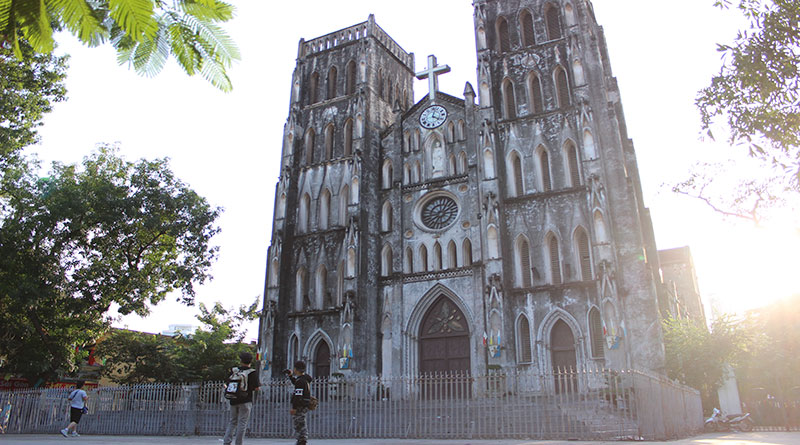
Locals will tell you the cathedral photographs best between 3:00 and 5:00pm, when the sun angles low enough to rake across the facade and pick out the texture in that blackened stone instead of flattening it. If you don't want to shoot from street level with tourists and cyclos in frame, get a table on the upper balcony of one of the cafes directly across the small square — Cong Ca Phe is the well-known one, with its retro wartime decor and coconut coffee, but there are a few others with similar elevated views. Order slowly, let the light shift, and you'll get a much cleaner shot than fighting the crowd at the gate.
Dress code matters here more than at most Hanoi sites — shoulders and knees covered if you want to go inside, and keep voices down during active services. Outside of Mass times, the doors are usually open for a quieter look at the interior.
This corner of the Old Quarter — cathedral, cafe balcony, that particular afternoon light — is one of the more requested stops on our photo walks, and it's easy to see why once you've sat across from it with a coffee for twenty minutes.
Turning the Trip Into a Shoot
The easiest place for a private photo walk is Day 1 morning, when the route already moves through varied Old Quarter and French Quarter textures.
TravelFrame's working experience combines a local companion, route planning, gentle posing support and photography. Exact package, duration, delivery and price are confirmed in writing.
Visit TravelFrame or message PHOTO to @travelframe.vn to discuss current options.
Frequently Asked Questions
Is 48 hours enough for Hanoi?
It is enough for a thoughtful introduction to the historic center and one wider neighborhood cluster. It is not enough to see every major attraction.
How should I travel between the Old Quarter and West Lake?
An app-based car is often the simplest option. Check the estimated fare in the app, confirm the vehicle and allow extra time for traffic.
What should I book in advance?
Confirm accommodation and any essential ticketed experience. Re-check official hours for museums, heritage sites and performances near the visit date.
Is this itinerary suitable for solo female travelers?
The route uses central, well-known areas and leaves daylight for most walking. Individual comfort and street conditions vary, so use normal city precautions and adjust any stop that feels uncomfortable.
See our full Hanoi Old Quarter guide.
👉 Want to walk Hanoi's French Quarter with a local who photographs you along the way? Join our French Colonial & Historical Footsteps private tour.