
Hanoi is easy to love through a camera. A woman in a conical hat rearranges flowers at a market stall. Motorbikes pile up at a red light. A temple gate glows at dusk. Within an hour you can fill a memory card.
Most of what you will photograph is also someone's home, shop or place of worship. A few simple habits make the difference between a traveler people smile at and one they wave away. This guide covers the ones locals notice most.
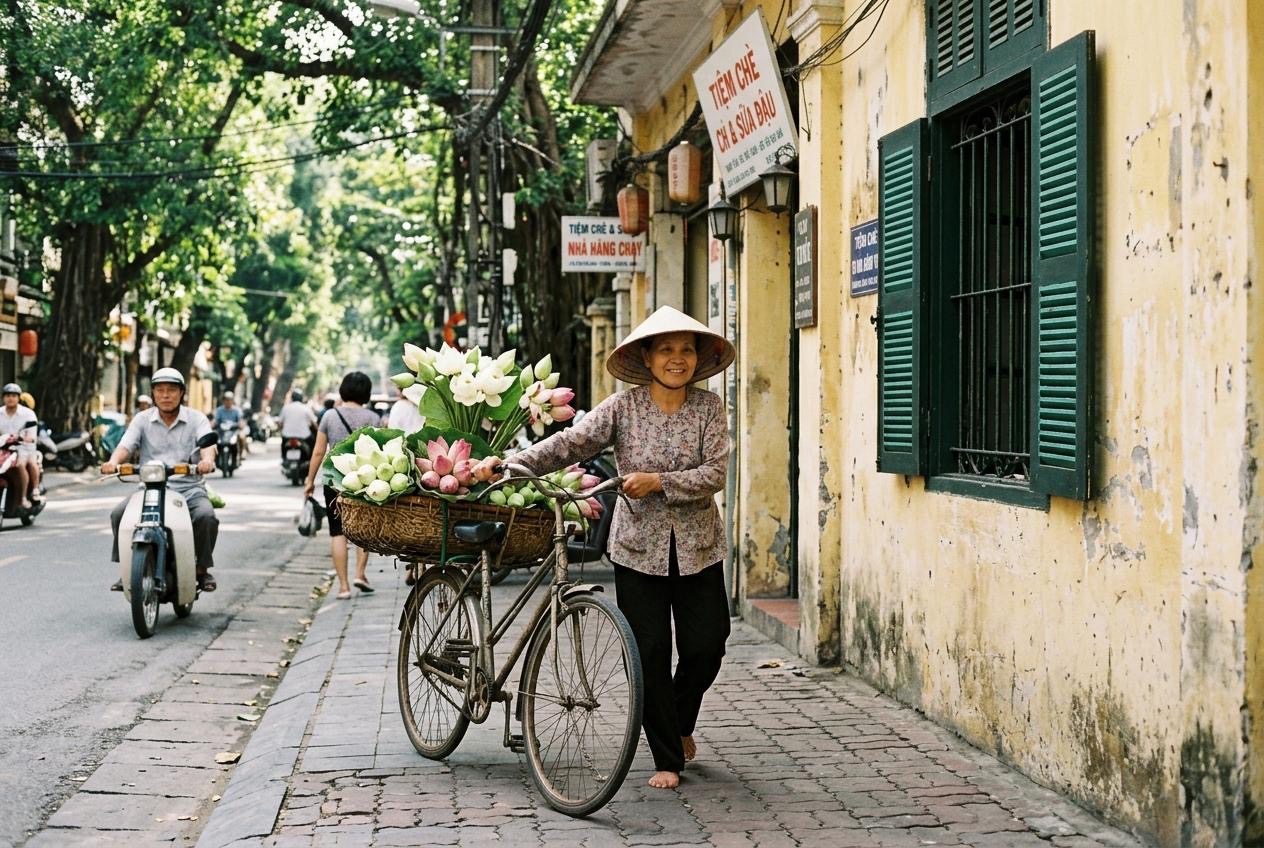
A street vendor and her bicycle of lotus flowers. Close portraits like this start with a smile and a question.
Photographing people: ask first, with a smile
Candid shots of busy streets, crowds and markets are part of daily life here. A close portrait is different. If one person fills your frame, ask first.
You do not need Vietnamese. Make eye contact, smile, lift the camera a little and raise your eyebrows. Most people will answer just as clearly. A nod or a laugh means yes. A turned head, a raised hand or a shake of the head means no, and that answer stands.
A few habits go a long way:
- Show them the photo. Turn your screen around. It is often the moment people start chatting.
- Children only with a parent's OK. Ask the adult nearby, not the child.
- Buy something from vendors. If a fruit seller is your subject, buy a bag of fruit. It is a fair trade for her time.
- Do not pay people to pose before you shoot. It turns a friendly moment into a transaction, and it encourages children to be sent out for tourists.
Learning one phrase helps too: Cho tôi chụp một tấm được không? ("May I take a photo?"). Even a clumsy attempt usually gets a smile.
Markets and shops are workplaces
Dong Xuan Market and the wet markets around the Old Quarter are at their most photogenic in the morning, when trade is busiest. That is also when vendors have the least time for you.
Stand to the side of aisles and stairways. Do not lean on stacked goods or step into a stall to get your angle. If a vendor is weighing, cutting or counting money, wait a moment. When the rush slows, people are far more relaxed about a camera.
For portraits in a market setting, the quiet hours give you more room and friendlier faces. Our Thin with Harry story at Dong Xuan shows how a portrait can include the market without getting in its way.
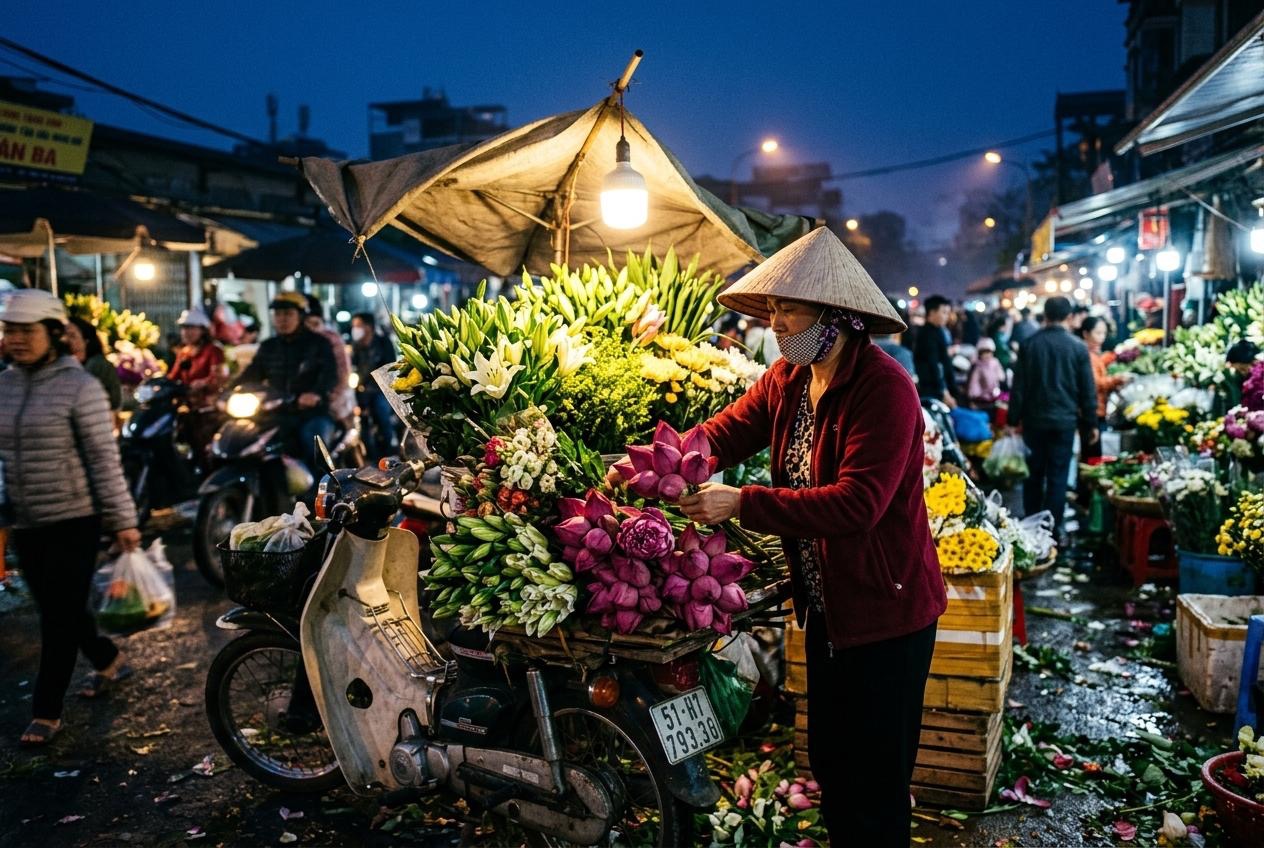
Before dawn at a Hanoi flower market, when trade is at its busiest.
Temples and pagodas: dress for the place
Pagodas such as Tran Quoc on West Lake and temples around Hoan Kiem Lake are active places of worship. People come to pray, make offerings and remember family.
- Cover your shoulders and knees. A light scarf in your bag solves this quickly.
- Turn off the flash and keep your voice low.
- Do not photograph people praying up close, and do not pose on altars, statues or offering tables.
- Look for signs at the entrance. Some halls do not allow photos inside.
Courtyards, gates and rooftops usually give you the best pictures anyway, with softer light and fewer people.
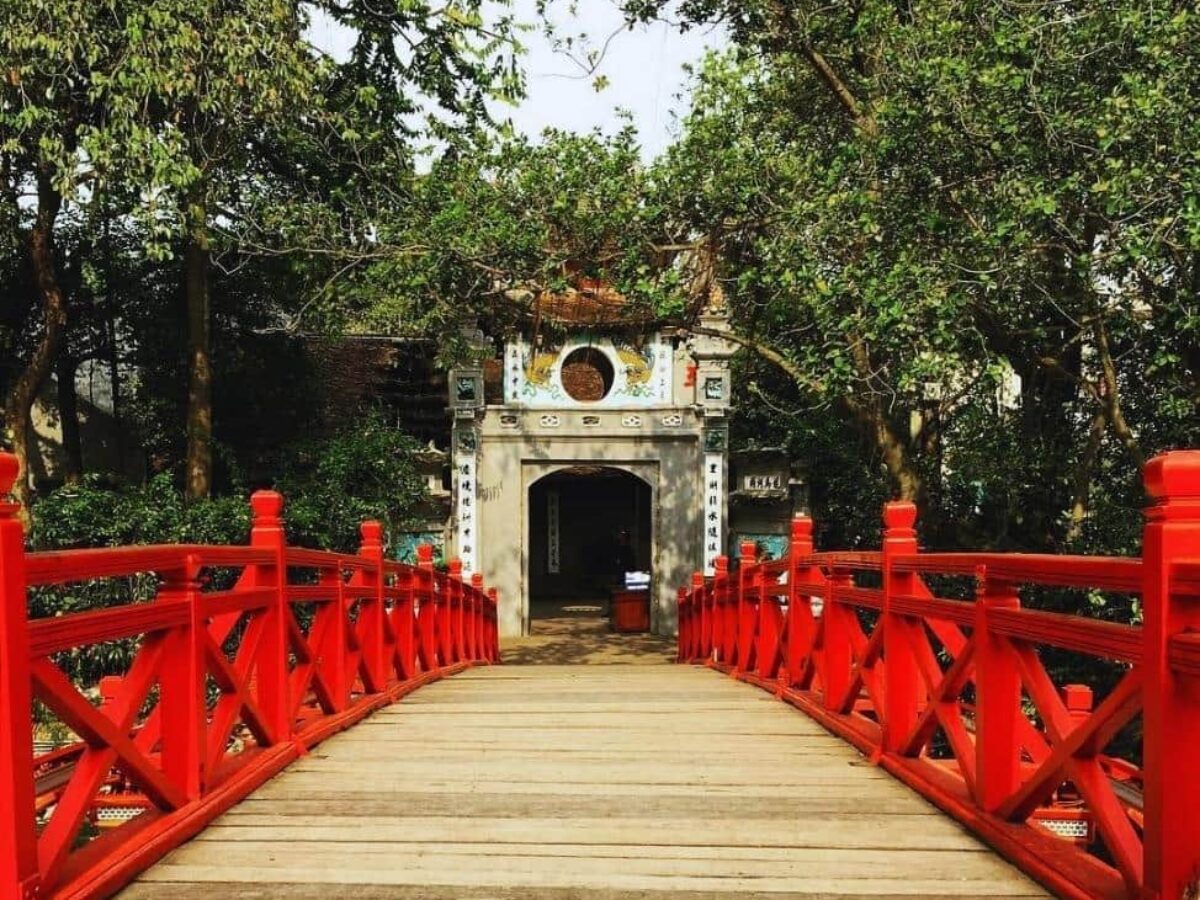
The Huc Bridge and the gate of Ngoc Son Temple. Gates and courtyards often make the best frames.
Ho Chi Minh Mausoleum and Ba Dinh Square
This is the most formal site in the city, and the rules are strict.
- No photos or video inside the mausoleum. That includes the chamber, and sharing interior images is not allowed.
- Leave big cameras behind. Large bags and professional cameras go to the storage counters. A phone or compact camera can come in, switched off.
- Dress modestly and follow the guards' instructions. Inside, stay silent, keep your hands out of your pockets and keep moving.
- Opening times are short. The mausoleum opens in the morning only and is usually closed on Mondays and Fridays. From November to March, it opens 8:00 to 11:00 (11:30 on weekends and public holidays). From April to October, it opens 7:30 to 10:30 (11:00 on weekends and holidays). Entry is free. Check current times before you go.
Photos of the square and the building from outside are common. If a guard signals you to lower your camera, do it straight away.
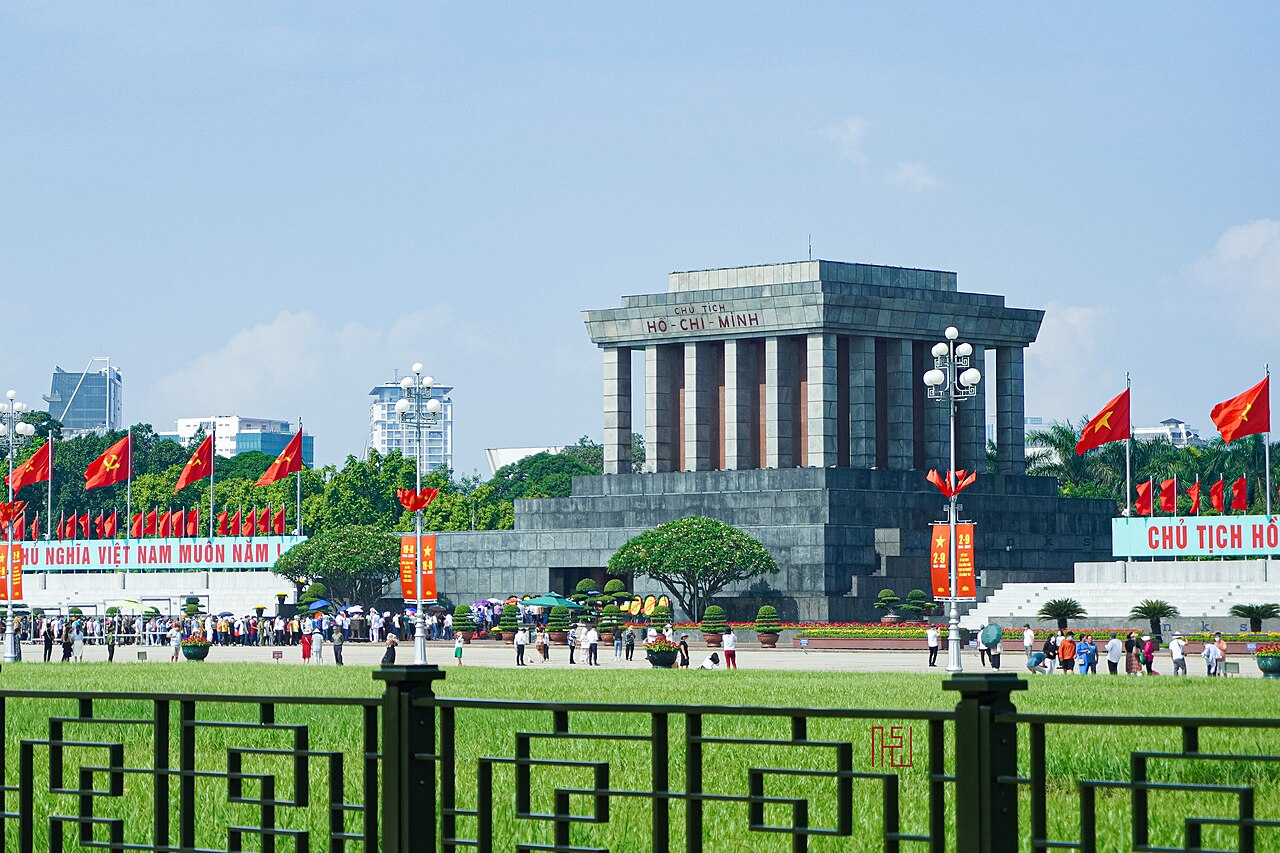
Ho Chi Minh Mausoleum from Ba Dinh Square. Outside photos are common; inside, cameras stay off.
Street traffic and night shots
Hanoi's traffic makes great photos. It also makes careless photographers fall over. Never step backwards into the road while framing a shot, and never stop in the middle of a crossing to take a picture.
For traffic trails at night, find a balcony or a café upstairs and shoot from there. You get the movement without standing in it. If you are new to crossing Hanoi's streets, read our guide to crossing the street in Hanoi first.
Want to be in a night photo yourself? Our night photoshoot story with Wuchr shows how buses and motorbikes can become part of the picture while you stay on the curb.
Train Street: check before you go
The railway alley in the Old Quarter is one of the most photographed places in Vietnam, and one of the most debated. Hanoi's tourism authorities have told tour companies since 2023 not to run Train Street tours. In early 2026, officials agreed to cut passenger trains through the area. The cafés have been closed and reopened more than once.
The rules here change, so read our Train Street safety guide before going. Whatever the current situation, stay off the tracks when a train is due and follow any instructions from officials on site.
The weekend walking street
From Friday evening to Sunday night, the streets around Hoan Kiem Lake close to traffic and fill with families, street games and music. It is a fun place for crowd shots and candid moments.
For clean portraits by the lake, go early in the morning instead. You will share the paths with joggers and people dancing, and the light is softer.
Drones need a permit
Vietnam requires drones to be registered and each flight to have a permit, which visitors generally cannot arrange on their own. Ba Dinh Square, the mausoleum, the Imperial Citadel and the airport are among the sensitive areas.
If you fly without a permit, your drone can be confiscated and you can be fined. If aerial shots matter to you, ask a licensed local operator instead.
Getting yourself into the photos
Most travelers come home with hundreds of photos of Hanoi and very few of themselves in it. Tripods in busy places block footpaths, and asking strangers rarely gives you the shot you want.
A local photographer solves both. They know where to stand, when a place is quiet and how to ask people around you. See how a session works on our Hanoi photoshoot page, or read what to expect when hiring a private photographer in Hanoi.
Questions travelers ask
Is it rude to take photos of people in Vietnam?
Photographing busy public scenes is normal. For a close portrait, ask first with a smile or a gesture, and accept a no.
Can I take photos inside the Ho Chi Minh Mausoleum?
No. Photos, filming and sketching are not allowed inside. Phones and compact cameras must stay switched off, and professional cameras go to storage.
Can I fly a drone in Hanoi?
Only with registration and a flight permit, which visitors usually need a local organization to arrange. Central areas like Ba Dinh Square are restricted.
What should I wear to photograph temples in Hanoi?
Cover your shoulders and knees. Bring a light scarf if you are wearing a sleeveless top.
Plan your Hanoi photos with a local
Send PHOTO to TravelFrame on Instagram with your travel dates and the places you want to photograph. We will help you plan a route that works for the light, the crowds and the people who live there.