
Last checked: November 20, 2026. Opening hours change around Tết and holidays, so confirm at the gate.
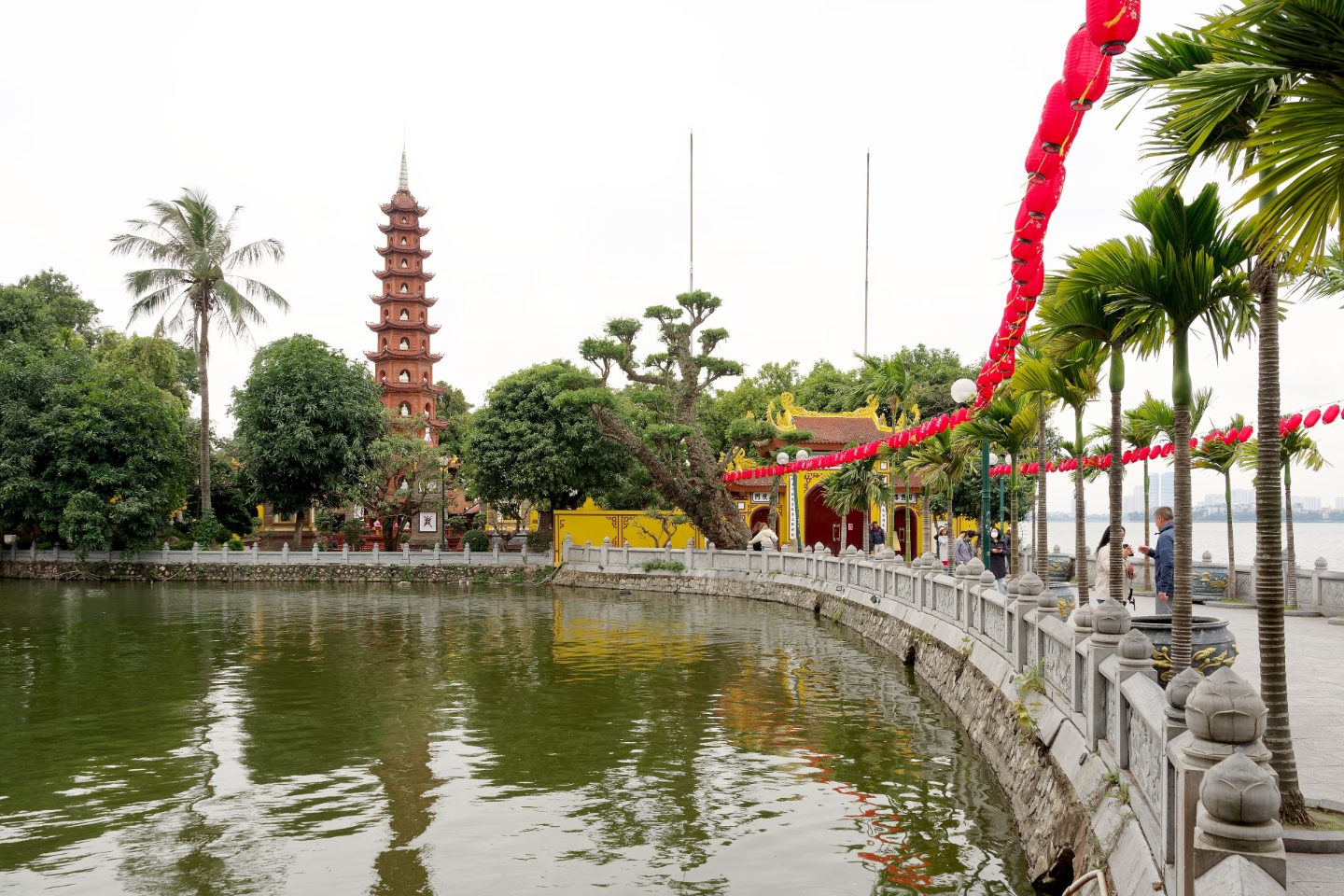
Trấn Quốc Pagoda is the red tower you see on postcards of West Lake: an eleven-storey stupa on a small island, reached by a short causeway from Thanh Niên Road. It is Hanoi's oldest Buddhist pagoda and still a working place of worship, with monks, daily ceremonies and local families lighting incense.
Most visits take 30 to 45 minutes. The two things that catch people out are the midday closure and the dress code, so read those first.
Quick answer
- Where: on Kim Ngư islet off Thanh Niên Road, on the eastern side of West Lake, about 3–4 km from the Old Quarter.
- Hours: roughly 7:30–11:30 and 13:30 to about 18:00. The gate closes over lunch. Hours run longer and crowds are bigger on the 1st and 15th days of the lunar month.
- Ticket: free. Donation boxes are inside.
- Dress code: shoulders and knees covered. It is checked at the gate.
- Best time for photos: early morning for few people, or late afternoon for warm light on the stupa.
Why it matters
The pagoda traces its origins to the 6th century, under Emperor Lý Nam Đế, when it stood on the bank of the Red River. As the river ate into that bank, it was moved in 1615 to Kim Ngư (Golden Fish) islet in West Lake, where it stands today.
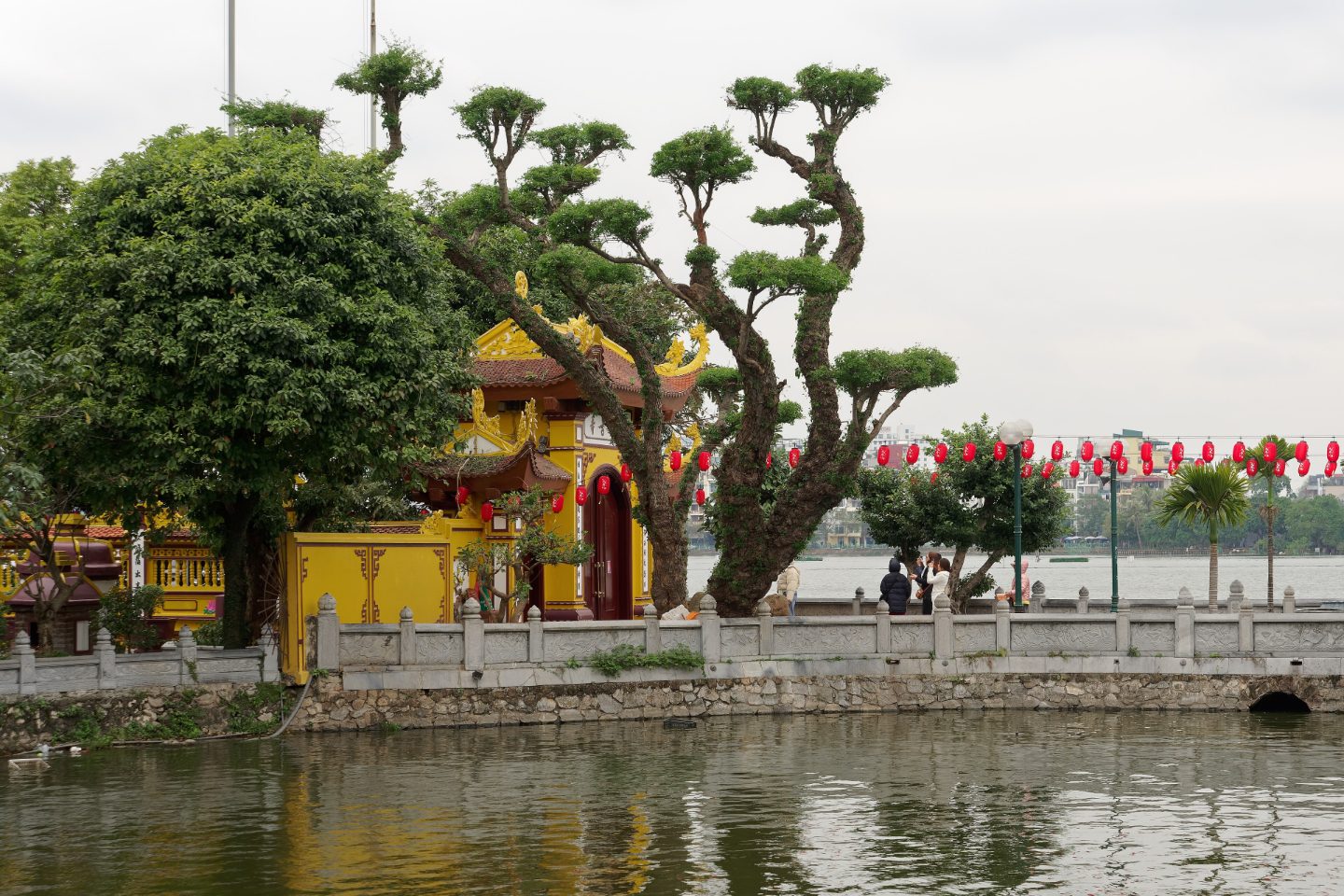
What you photograph is a mix of ages. The halls and courtyards are old, and some statues and an inscription date to 1639. The famous red stupa is much newer: it was built in 1998, rises about 15 metres over eleven storeys and is crowned with a lotus. Knowing this helps you frame it honestly, as a living temple rather than a ruin.
What to see
The stupa
Each storey has six arched openings, each holding a statue of Amitabha Buddha. Walk around it once before you take a photo; the side facing the lake is usually quieter.
The Bodhi tree
In the garden stands a Bodhi tree grown from a cutting of the tree at Bodh Gaya in India, where the Buddha is said to have reached enlightenment. It was a gift in 1959 from Indian President Rajendra Prasad, and it is treated as sacred, so do not climb or lean on it for photos.
Halls and courtyard
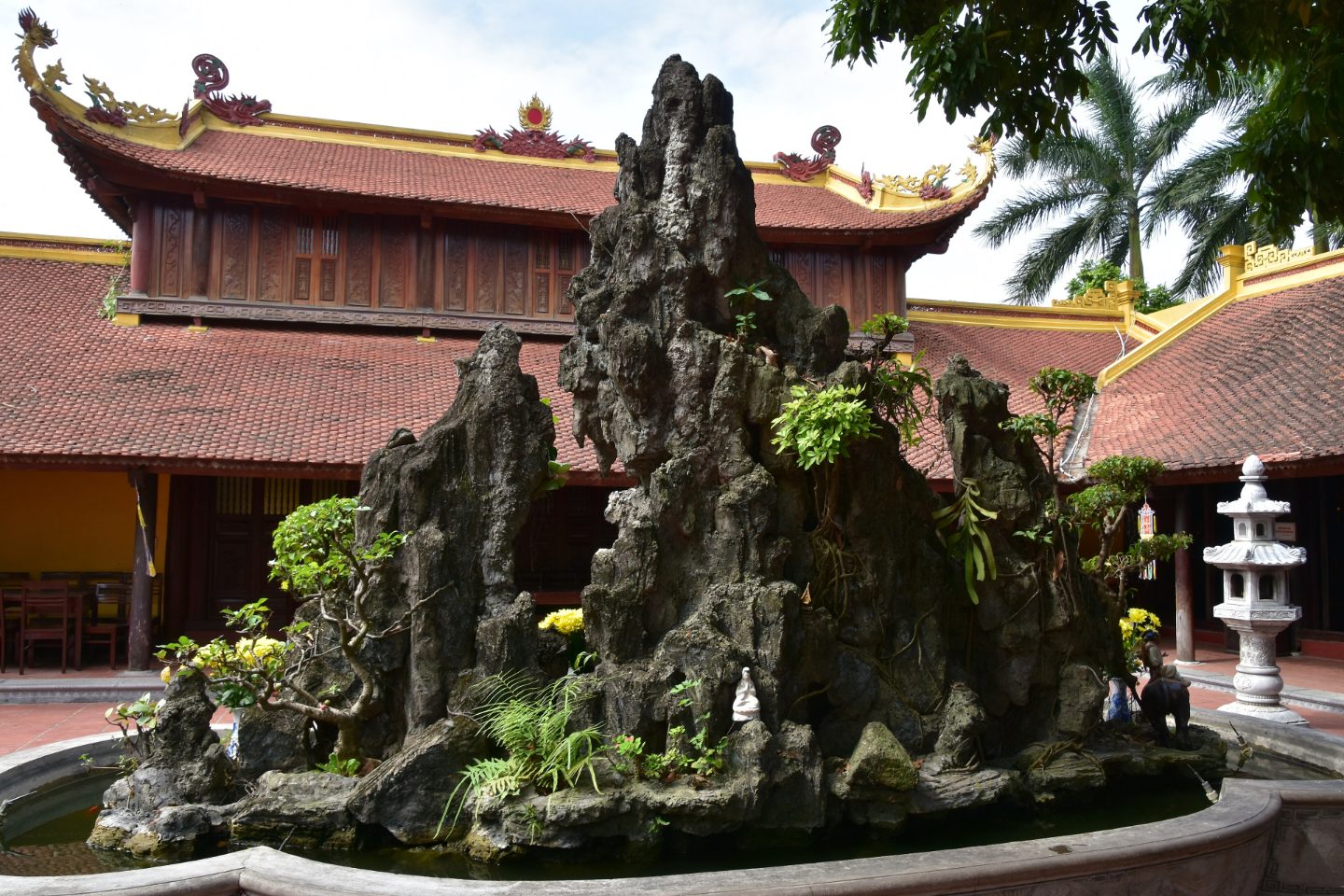
The main halls hold gilded statues and old steles. Bonsai, rock gardens and stone lanterns fill the courtyards, which make softer, closer backgrounds than the stupa.
Opening hours, ticket and dress code
| What | Details |
|---|---|
| Morning | about 7:30–11:30 |
| Afternoon | about 13:30–18:00 (some sources say 18:30) |
| Lunar 1st and 15th | longer hours, heavy local crowds |
| Ticket | free; donations welcome |
| Dress | cover shoulders and knees; no shorts, short skirts or tank tops |
If you only have shorts, bring a light sarong or long scarf. Speak quietly, do not point your feet at altars, and ask before photographing monks or people praying. Our Hanoi photography etiquette guide covers this in more detail.
How to get there
From the Old Quarter, a Grab car or taxi takes about 10–15 minutes outside rush hour. Ask for "Chùa Trấn Quốc, Thanh Niên". By bike it is an easy flat ride north. There is no boat or back entrance: everyone walks in along the causeway.
Photo tips
- Morning (7:30–9:00): the fewest people inside the courtyard. Light is soft and the stupa is not yet in harsh sun.
- Late afternoon: the stupa turns warm red. From Thanh Niên Road and the lake shore, the sun sets behind the pagoda across the water.
- Lenses: a wide lens fits the whole stupa inside the courtyard; a 70–135 mm lens from the road compresses the stupa against the lake.
- Avoid: the lunar 1st and 15th if you want empty frames, and arriving at 11:20, when the gate is about to close.
Combine it with
- West Lake: stay for sunset on Thanh Niên Road, or rent a bike for part of the loop.
- Quán Thánh Temple: a short walk south along Thanh Niên Road.
- One Pillar Pagoda: near Ba Đình Square, a few minutes by car.
- More places to shoot: 15 Hanoi photo spots you can shoot in one day.
Want photos of yourself here?
A TravelFrame photographer-guide can time your visit for the light, handle the dress code and photograph you naturally on the causeway and by the lake, then continue to West Lake or the Old Quarter. Photography is priced per hour for up to 2 guests: Basic 30 USD, Premium 60 USD (from 2 hours) and VIP 99 USD (from 2 hours). See Hanoi photoshoot, or send "PHOTO" to @travelframe.vn on Instagram.
FAQ
Is Tran Quoc Pagoda free?
Yes. There is no ticket. Donations are welcome inside.
What are Tran Quoc Pagoda's opening hours?
Roughly 7:30–11:30 and 13:30 to about 18:00, with a closure over lunch. Hours are longer on the 1st and 15th days of the lunar month and can change around holidays.
Is there a dress code?
Yes. Cover your shoulders and knees. Shorts, short skirts and tank tops can be refused at the gate.
How old is Tran Quoc Pagoda?
Its origins go back to the 6th century, and it moved to its current island in 1615. The red stupa itself was built in 1998.
How long should I spend there?
30 to 45 minutes is enough for most visitors. Add an hour if you want sunset on West Lake afterwards.